Guides / For Shops
Scheduling a Brass Turning Shop Around Bar Supply, Plating and Leak Test
Published November 21, 2026. Reviewed for the facts in the corrections log.
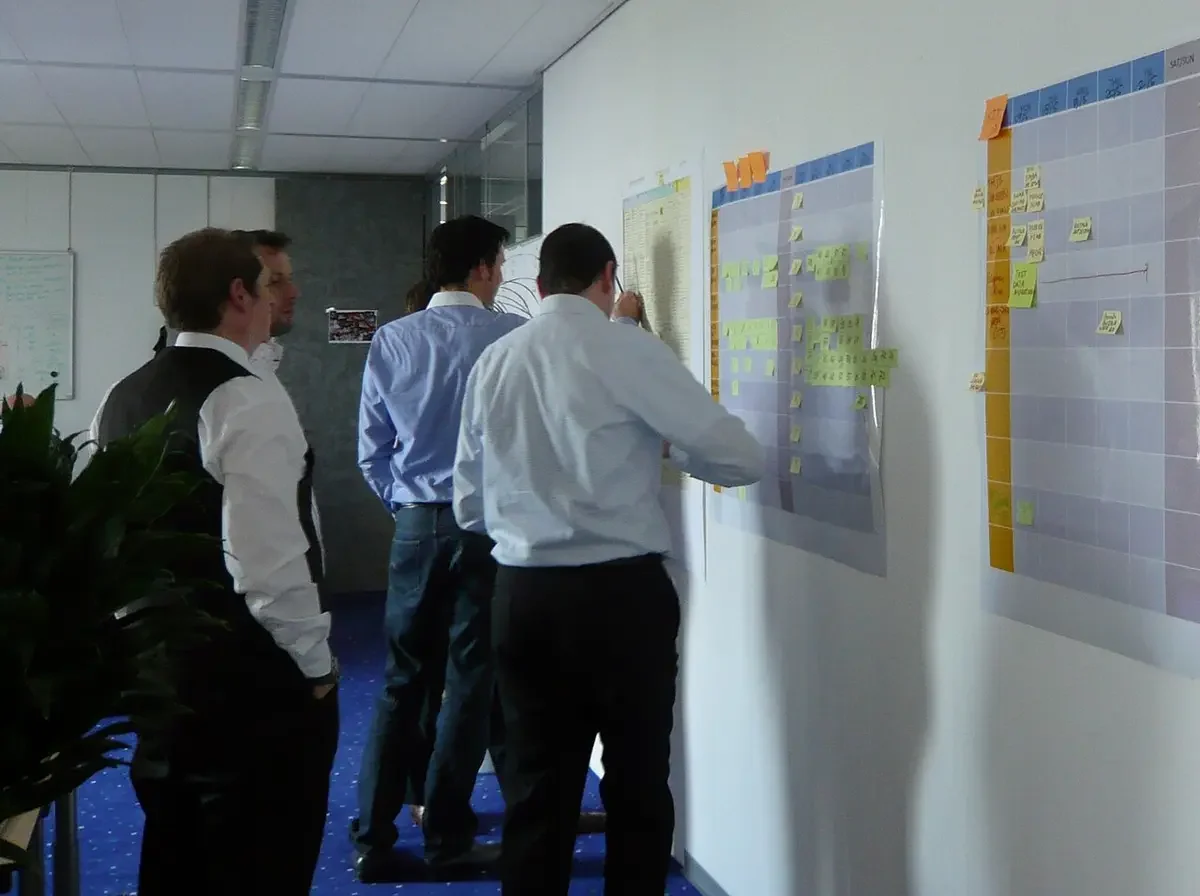
A brass turning shop can keep promised dates with a weekly board that plans around three constraints: bar on hand, screw machine changeovers, and the outside steps of plating and leak test. Book those steps when the job is released, sequence by alloy and bar size, freeze next week and tell buyers any slip early.
A brass shop with full machines can still ship late. The usual cause is not machine hours. It is a bar that has not arrived, a plating slot that was never booked or a leak test fixture that was busy. A schedule that plans only the lathe misses the steps that decide the ship date.
This guide gives a weekly method for a small brass turning shop: the three constraints, a board you can build in a spreadsheet, how to sequence by alloy and bar size, how to book outside steps early, how to freeze a week and how to report dates to buyers. A board template and a meeting checklist are included.
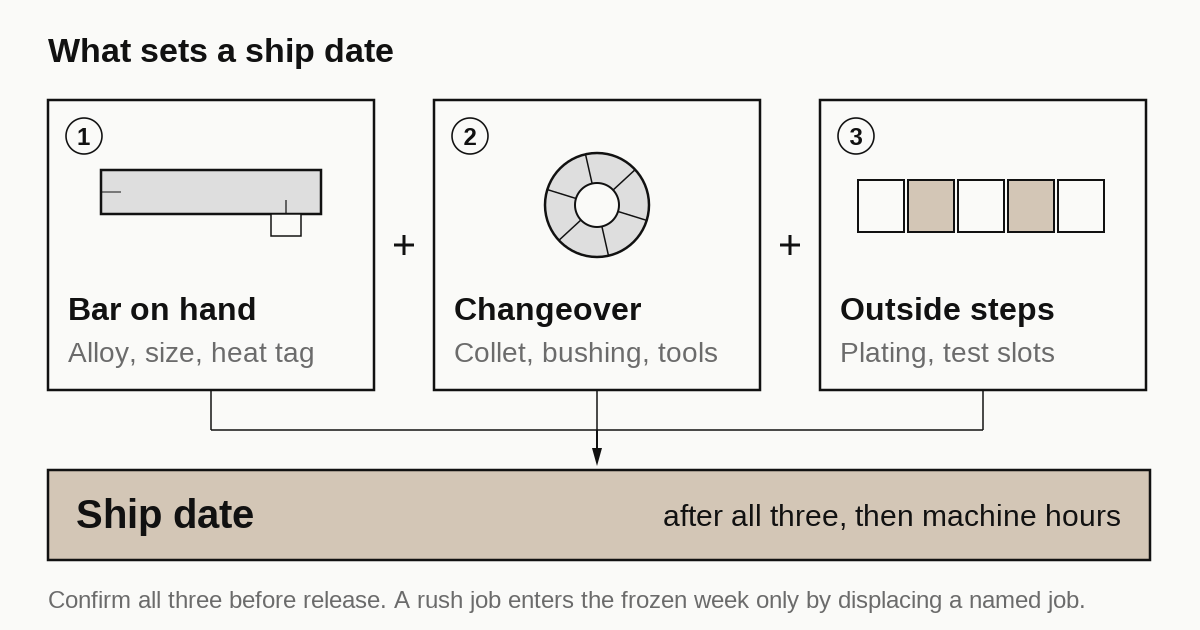
The three constraints in a brass shop
Production planning has to account for material availability, resource availability and expected demand, and it works over a planning horizon (Wikipedia). In a brass turning shop that becomes three questions you ask for every job before it starts.
Is the bar here? Brass bar is bought by alloy and size. A job released without bar is not released. Check stock against the job card, count it, and if it is short order it the day the job is accepted, not the day the machine needs it. If you keep both leaded and lead-free alloys, check the right one: keeping leaded and lead-free bar apart covers the controls.
Can the machine change over in time? A screw machine is set up for a bar size and a part family. The collet that grips the bar must match the bar, because collets have a narrow clamping range and many sizes are needed to cover a range of stock (Wikipedia). A change of bar size means a change of collet, and often of guide bushing, feed tube and tools. See changeover reduction on brass screw machines for cutting that time.
Are the outside steps booked? Plating, passivation, heat treatment and final leak test often run on a calendar you do not control. Your lead time to the buyer includes them. Lead time is commonly split into the work before the job starts, the processing itself and the time after, which includes receiving and inspection (Wikipedia). Your schedule has to include the last part.
ISO 9001 describes the same thinking. A company plans, implements and controls its processes, decides what resources it needs and keeps the records that show the process ran as planned (Advisera, on clause 8.1, Operational planning and control).
A schedule board by machine and week
The board is a table with one row per job per machine. Use a spreadsheet or a whiteboard. What matters is that everyone reads the same sheet.
| Machine | Job | Alloy | Bar size | Start | Finish | Outside step | Ship date |
|---|---|---|---|---|---|---|---|
| Swiss 1 | J-2301 | C360 | 12 mm round | Mon | Tue | None | Wed |
| Swiss 1 | J-2302 | C360 | 12 mm round | Wed | Fri | Plating, booked Mon | Next Thu |
| Multi-spindle 2 | J-2297 | C69300 | 25 mm hex | Mon | Thu | Leak test, slot Fri | Next Tue |
| Multi-spindle 2 | J-2305 | C69300 | 25 mm hex | Fri | Next Tue | Leak test, slot Wed | Next Fri |
The rows are examples. Add a status column (bar OK, tooling OK, outside step booked) and colour a cell red when any of the three is missing. A red cell is a job that should not start.
Forward scheduling starts from when resources become available and works toward the due date. Backward scheduling starts from the required date and works back to a start date (Wikipedia). Use backward scheduling to set the latest start date for a job with a plating step, then forward scheduling to see whether the machine can meet it.
Sequencing jobs by alloy and bar size
A good schedule meets customer due dates and reduces changeovers and inventory at the same time (Wikipedia). On a brass machine two groupings help.
By bar size. Jobs that share a bar size share a collet and often a feed tube and guide bushing. Run them in one block and the machine changes over once.
By alloy. Group lead-free jobs together and leaded jobs together, so the machine, chip conveyor and coolant are cleaned once between the two blocks rather than several times. Fewer alloy changes also means fewer chances of a swarf mix-up.
Due dates decide the order of the blocks. If a job would miss its date inside a block, pull it out and run it early. The rule is: group within a week, let the date decide the order, and never group so tightly that a job misses its date.
Leveling the load helps too. Heijunka, the lean practice of production leveling, builds at a steady average rate and interleaves products that share a process instead of running large single-model batches (Wikipedia). For a job shop that means avoiding a week of all hard jobs followed by a week of easy ones.
Turn brass every week? Apply as a partner shop
Booking plating and leak test before the job starts
The outside step is where promised dates go to die. Three habits fix most of it.
- Book the slot at release. When a job is released to the floor, send the plating house a note with the quantity and the expected arrival date. Record the booking on the board.
- Confirm two days before. Ask the plating house to confirm the slot. If it cannot, you know before the lot is finished.
- Reserve the test. For leak test, book the station or fixture the same way. If the fixture is shared between part numbers, put the test slots on the board as if they were a machine.
Count the transport and queue time for outside steps in the ship date, not only the process time. See plating finishes for brass for what the finish adds, and quoting brass parts for how to put those steps into a quote.
Freezing the next week and handling rush orders
At the weekly meeting, freeze the coming week. A frozen week means the sequence and the start dates do not change, except by a rule. The rule can be short:
- A rush job enters the frozen week only if the planner names the job it displaces and the new date for that job.
- A change in quantity that needs new bar is treated as a new job.
- The planner informs the buyer of any displaced job on the same day.
Outside the frozen week, keep the plan loose. It will change, and a detailed plan for week five is guesswork.
Reporting dates to buyers
Buyers need a date they can plan on and an early warning. Send a short weekly list: job, buyer’s date, your expected ship date, status. When a date moves, add a reason in one line: bar delay, plating slot, rework, rush displaced. Over a few months the reasons show where the schedule leaks.
Do not promise a date that depends on a step you have not booked. If you cannot confirm the outside step, say so and name the date by which you will.
Weekly scheduling meeting checklist
Hold the meeting at the same time each week. Fifteen to thirty minutes is enough for a small shop.
- Review last week: which jobs shipped on the promised date and which did not. Write the reason for each miss.
- Check bar: any job in the next two weeks without confirmed bar in the right alloy and size?
- Check outside steps: any job in the next two weeks without a confirmed plating or test slot?
- Check tooling: collets, bushings and gauges for the next week’s jobs on hand and in calibration.
- Freeze next week. Name any open rush request and what it would displace.
- Update the board and the buyer list. Send the buyer list the same day.
- Record one thing to fix: the single recurring cause of misses this month.
Run the checklist from the same sheet each week. A schedule that lives in one person’s head fails when that person is away.
If you turn brass and want work from buyers who plan their releases, apply as a partner shop. We send work requests by alloy, quantity and finish, you quote us and we place the purchase order. There is no fee to join.
Frequently asked questions
What limits the schedule in a brass turning shop?
Usually three things: bar on hand in the right alloy and size, the time a screw machine needs to change from one part family to the next, and outside steps such as plating and final leak test that run on someone else's calendar. Plan around those first and the machine hours second.
How far ahead should a small shop freeze its schedule?
Freeze the coming week and change it only by a named rule. Beyond that, keep the plan loose and update it at the weekly meeting. A frozen week lets the floor set up in advance and gives buyers a date they can rely on. Rush jobs enter only by displacing a job the planner names.
Should jobs be sequenced by due date or by alloy and bar size?
Both matter. Sequencing by bar size and part family cuts changeovers, and sequencing by due date protects promised ship dates. A practical rule is to group by bar size within a week and let the due date decide the order of the groups. Never group so tightly that a job misses its date.
How do I tell a buyer that a date will slip?
Tell them as soon as you know, with the new expected ship date and the reason in one line. A short weekly list of promised and expected dates, with a reason code for every change, lets a buyer plan. Late news costs more trust than late parts.
Alloys in this guide
| Alloy | Lead % | Mach. | DZR |
|---|---|---|---|
| C360 free-cutting brassC36000 · CuZn36Pb3 / CW603N | 2.5 to 3.7 | 100 | Poor |
| C69300 silicon brassC69300 · CuZn21Si3P / CW724R | under 0.09 | 80 | High |
Published typical values for the alloy. Machinability against C360 at 100. Not a promise from a shop.
Sources
- Wikipedia, Production planning en.wikipedia.org
- Wikipedia, Scheduling (production processes) en.wikipedia.org
- Wikipedia, Heijunka en.wikipedia.org
- Wikipedia, Lead time en.wikipedia.org
- Wikipedia, Collet en.wikipedia.org
- Advisera, clause-by-clause explanation of ISO 9001:2015 info.advisera.com
Turn brass every week?
Brass CNC Parts sends brass work requests and nothing else. We are your customer: you quote us and we place the purchase order. No fee to join.