Guides / For Shops
Why Brass Fittings Fail the Buyer's Incoming Inspection, and What the Shop Can Fix
Published November 21, 2026. Reviewed for the facts in the corrections log.
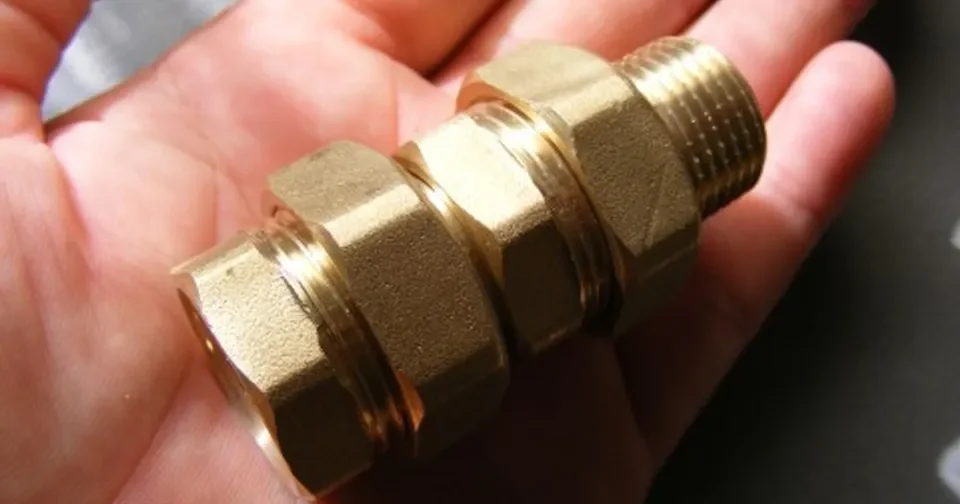
Brass fittings fail incoming inspection for a short list of reasons: threads that do not gauge after plating, burrs in the bore, a certificate that does not match the lot, leaded and lead-free bar mixed, swarf or oil in the part and packing damage. A shop finds most of them first by running the same checks.
A rejected lot costs a shop more than the parts. It also costs the time to sort and rework, the freight back and the trust of a buyer who may have sent a first order to see how you behave. The useful fact is that most fitting rejects are not mysterious. They come from a short list of causes, and nearly all of them can be checked in your own shop before the lot ships.
This post lists those causes as the buyer sees them, the usual cause on the shop floor and the check that catches each one.
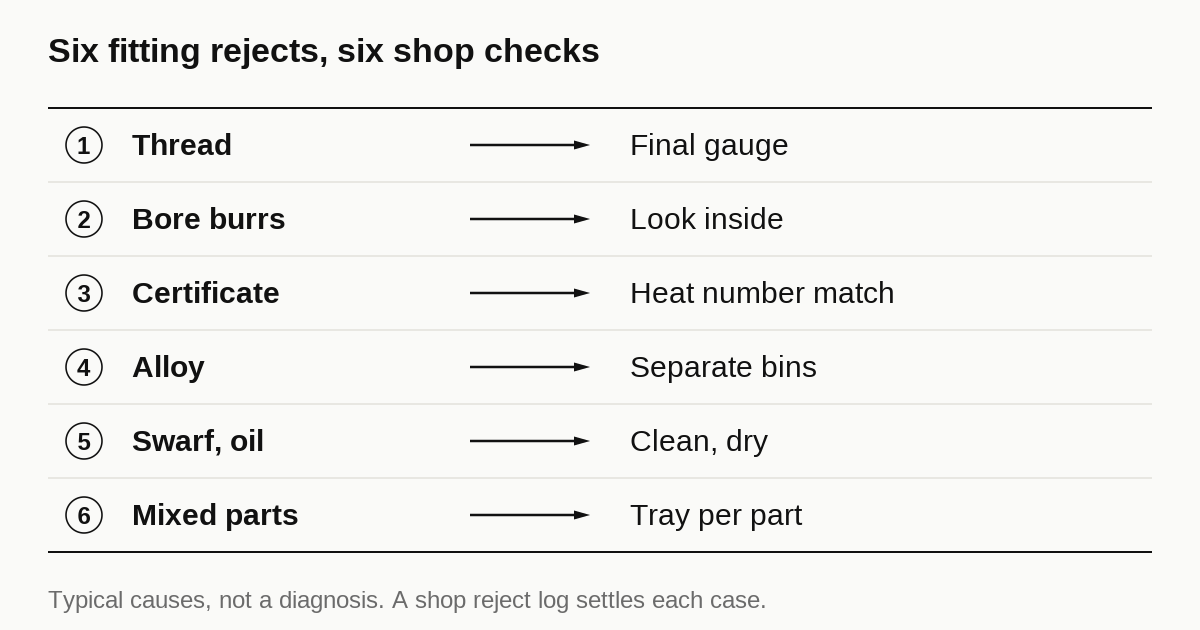
How a buyer decides to reject
A buyer does not usually test every piece. Most use a sampling plan, often an AQL plan, and sort defects into classes. A critical defect is one that is unsafe or breaks a mandatory regulation. A major defect is likely to cause failure or reduce usability. A minor defect is a workmanship shortfall that does not affect use. Buyers choose the accept and reject numbers for each class, and for a fitting that must hold pressure, a critical defect usually takes an accept number of zero.
This matters to a shop for one reason. One leaking fitting, or one fitting in the wrong alloy, can fail the whole lot, however good the rest. Check the critical items on every piece and sample only the minor ones. There is no public figure for how often fitting lots are rejected, so the reject log you keep in your own shop is the only reliable data.
The six causes, from the buyer’s side
| What the buyer sees | Usual cause in the shop | Check that catches it before shipping |
|---|---|---|
| Thread fails the gauge | Gauged before plating, worn tool, wrong gauge type, packed swarf | Gauge after the last operation with the buyer’s gauge type |
| Burrs at the thread start or in the bore | No chamfer, cross hole intersection not deburred | Look into the bore with light and a pin gauge, on a sample |
| Certificate does not match the lot | Certificate from a different heat, wrong type | Match heat number on the bar tag, certificate and lot label |
| Wrong alloy or lead level | Leaded and lead-free bar mixed in the shop | Segregate bar and bins, test bar on receipt |
| Oil, swarf or stain in the part | Short wash, parts wet when packed, tarnish | Clean and dry, then pack, and look into the bore |
| Damaged or mixed parts in the box | Threads knocked in bulk packing, two part numbers in one bin | Separate trays, one part number per box, count at the pack bench |
Threads that fail the gauge
Threads are the most checked feature on a fitting, so they are also the most rejected. Four causes repeat. The buyer gauges after plating and you gauged before: a plating layer thickens the thread flanks and the pitch diameter grows. The buyer uses a different gauge type, for example an L1 notched gauge on an NPT thread where you used a parallel pair. The part was oily or packed with swarf when you gauged it and the gauge did not seat. Or your own working gauge has worn past its limit.
The remedy is cheap. Gauge after the last operation, with the gauge the drawing names, on parts that are clean. Check your working gauges against a master on a schedule. The pass and fail logic is in thread gauging brass fittings.
Burrs that the gauge does not show
A burr is a raised edge left on the part after machining. It causes trouble in assembly, where it can stop a part from seating or damage the mating part, and it concentrates stress at hole edges. On a fitting the worst burrs are inside, at the point where a cross hole meets the main bore. They are out of sight and a buyer finds them with a borescope or by cutting a part open.
A shop that deburrs only the outside will fail on these. Ask where the burr limit applies and what size is allowed, because “break all sharp edges” sets no number. Then use a method that reaches the intersection, such as a cross hole deburring tool or a tumbling cycle proved on a sample. Deburring brass parts and the cross hole burr problem covers the methods.
Paperwork that does not match the lot
A lot with good parts and the wrong certificate still fails. A type 3.1 certificate under EN 10204 states test results from the heat and lot delivered, signed by the manufacturer’s authorised representative. A 2.2 report holds results from the same grade that may not be from this lot. If the order says 3.1 and you attach a 2.2 report, or a 3.1 certificate that names a different heat, the buyer cannot release the lot.
The check is clerical and takes minutes. Match the heat number on the bar tag, on the certificate and on the lot label, and keep that chain for every lot. See material certificates for brass parts for what each type contains.
Wrong alloy or a lead level that does not fit
For a part that touches drinking water in the US, the Safe Drinking Water Act sets lead free as a weighted average of 0.25 percent lead across the wetted surfaces. Buyers of such parts may test the alloy on receipt. A lot machined from leaded bar in the wrong order fails at once, and nothing in the thread or the finish will save it.
This reject starts at the bar rack. Keep leaded and lead-free bar apart, label every bin, and run the line clearance check at each changeover. The method is in poka-yoke for leaded and lead-free brass.
Dirt, oil and stains
Brass parts tarnish, and a buyer who opens a box to find dull, stained or oily fittings may reject them without gauging. Swarf trapped in a cross hole is worse, because it travels downstream into a valve or a meter. Wash, dry, then pack in an inhibited bag or paper, and look into the bore of a sample before sealing the box. More on the packing side is in brass tarnish prevention and shipping.
Leaks found late
If the drawing asks for a leak test and the shop’s method differs from the buyer’s, a part can pass at your bench and leak at theirs. A bubble test shows a leak and where it is, but depends on the operator. A pressure decay test measures a leak rate but does not show where it is. Agree the method, pressure, hold time and acceptance rule in writing, and run the same method on a sample from every lot. For the test set-up, see leak and pressure testing brass valve bodies.
Run the buyer’s inspection before you ship
The most reliable way to cut rejects is to run the buyer’s checks on your own bench, on a sample from every lot, before the box is closed. Record the result against the lot number.
- Threads gauged after the last operation, with the named gauge type.
- Bore checked for burrs at cross holes.
- Heat number matched across bar tag, certificate and label.
- Alloy checked on the bar and on a finished part.
- Parts clean, dry and packed one part number per box.
- Leak test run by the agreed method on the agreed share of the lot.
Turn brass every week? Apply as a partner shop
When a lot is rejected
Do not argue the first call. Ask for the failing parts or photos, the gauge or test method used and the drawing revision the buyer judged against. Test your retained samples the same way. If the buyer is right, sort, replace and write down the cause. If the readings differ, send your own data and ask to compare gauges. A shop that answers quickly and with data keeps the account more often than one that disputes the first report.
Talk to us
If you turn brass fittings for buyers abroad and want to discuss how your shop handles inspection, apply through the shop page. We reply within 24 business hours.
Frequently asked questions
What is the most common reason brass fittings are rejected at incoming inspection?
There is no public survey of reject causes, so any ranking is a shop's own experience. The causes that come up most on fitting lots are thread gauge failures, burrs at hole edges, paperwork that does not match the lot and cleanliness. Keep your own reject log by cause for a few lots and rank them from that.
Why does a thread that passed in my shop fail at the buyer?
Common reasons: the buyer gauges after plating and you gauged before, the buyer uses a different gauge type such as an NPT L1 gauge, the part was oily or packed with swarf when you gauged it, or your gauge is worn. Compare your gauge with the buyer's master and ask which condition they test in.
What do critical, major and minor defects mean on a fitting lot?
Under AQL practice, a critical defect is unsafe or breaks a mandatory regulation, a major defect is likely to cause failure or reduce usability, and a minor defect is a workmanship shortfall that does not affect use. Buyers often set an accept number of zero for critical defects such as a leak or the wrong alloy.
Can a wrong certificate fail a lot with perfect parts?
Yes. A buyer who needs a 3.1 certificate for the delivered lot may reject a lot with a 2.2 report or a certificate that names a different heat. The parts may be good, but the lot cannot be released without the paperwork the order called for.
Alloys in this guide
| Alloy | Lead % | Mach. | DZR |
|---|---|---|---|
| C360 free-cutting brassC36000 · CuZn36Pb3 / CW603N | 2.5 to 3.7 | 100 | Poor |
| C69300 silicon brassC69300 · CuZn21Si3P / CW724R | under 0.09 | 80 | High |
Published typical values for the alloy. Machinability against C360 at 100. Not a promise from a shop.
Sources
- Wikipedia, Acceptable quality limit en.wikipedia.org
- Wikipedia, Deburring en.wikipedia.org
- US EPA, Use of lead free pipes, fittings, fixtures, solder and flux for drinking water epa.gov
- Project Materials, EN 10204 certificate types blog.projectmaterials.com
- Cincinnati Test Systems, 5 most common types of leak testing cincinnati-test.com
Turn brass every week?
Brass CNC Parts sends brass work requests and nothing else. We are your customer: you quote us and we place the purchase order. No fee to join.