Guides / Materials
ASTM B16/B16M Free-Cutting Brass Rod: What It Covers, What to Quote and Where Buyers Misread It
Published November 21, 2026. Reviewed for the facts in the corrections log.
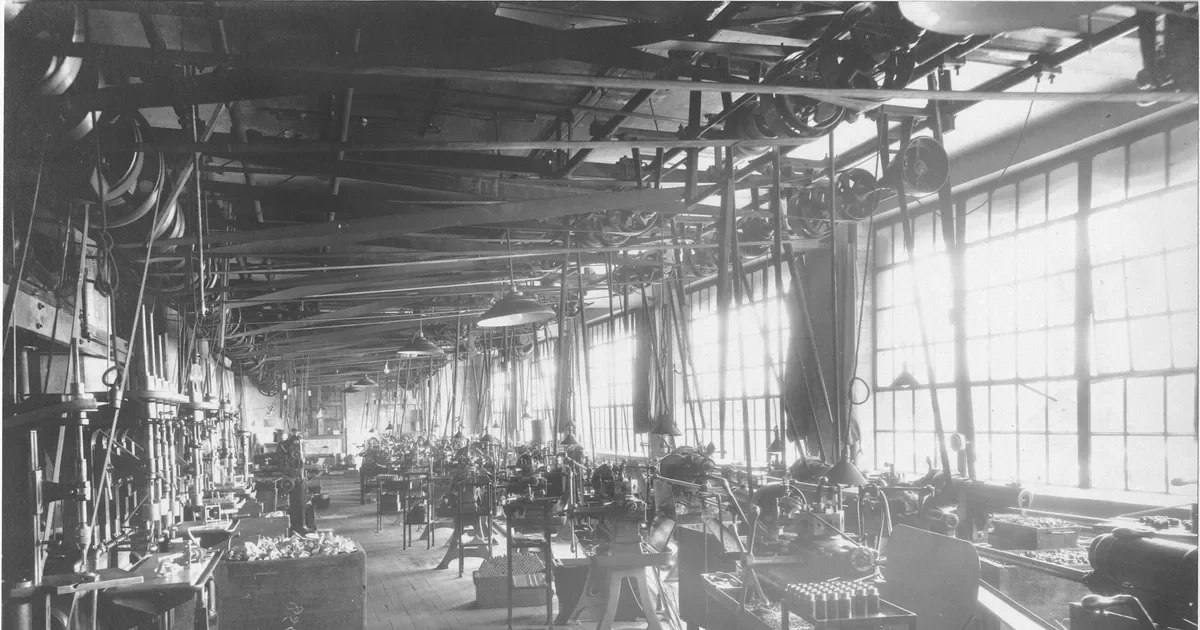
ASTM B16/B16M is the US product specification for free-cutting brass rod, bar, wire and shapes made from UNS C36000 or C36010, intended for high-speed screw machining and moderate thread rolling. The 2024 edition replaced the 2019 one. It sets composition, temper, tensile strength, hardness and shape limits. Cite the UNS number, the edition year, the temper and the size.
ASTM B16/B16M is the US product specification for free-cutting brass rod, bar, wire and shapes made from copper alloy UNS C36000 or C36010, for high-speed screw machining and moderate thread rolling. The current edition is B16/B16M-24, approved in July 2024, and it replaced the 2019 edition. This post is part of our guide to brass grades. It covers what the standard governs, what a buyer should quote from it and the places it is misread.
We do not certify parts or give legal advice. The standard text is paywalled and I did not read it. Everything below comes from the ASTM and SIS catalogue pages, the Copper Development Association (CDA) alloy pages and mill datasheets, all opened in October 2026, and none of it replaces the standard.
Checked October 2026.
What B16/B16M is and who issues it
ASTM International publishes it as Standard Specification for Free-Cutting Brass Rod, Bar and Shapes for Use in Screw Machines. The scope on the catalogue page reads as a product standard: rod, bar, wire and shapes of any specified cross section, made from the listed alloys, for high-speed screw machining and moderate thread rolling. The abstract says it covers chemical composition, temper, tensile strength, Rockwell hardness and shape requirements.
It is a mill-product standard. It tells a mill what bar it may sell under the designation, and a buyer what to expect on delivery. It does not tell a shop how to cut the bar or a designer how to dimension a part.
Scope and the two UNS numbers
The scope names C36000 and C36010. The 2019 edition, now cancelled, names both as well, according to a catalogue page for that edition, and the 2024 edition replaces it according to the SIS listing. I did not check earlier editions.
The two numbers differ in lead. CDA gives C36000 60.0 to 63.0 percent copper, 2.5 to 3.0 percent lead and up to 0.35 percent iron. It gives C36010 the same copper and iron limits and 3.1 to 3.7 percent lead. This site’s datasheets show free-cutting brass at 2.5 to 3.7 percent lead, which is the two numbers taken together. A drawing that says only C360 can be read either way.
| C36000 | C36010 | |
|---|---|---|
| Copper | 60.0 to 63.0 percent | 60.0 to 63.0 percent |
| Lead | 2.5 to 3.0 percent | 3.1 to 3.7 percent |
| Iron | 0.35 percent max | 0.35 percent max |
| Zinc | Remainder | Remainder |
| Machinability rating (C360 = 100) | 100 | 100 |
| Product specifications listed by CDA | ASTM B16/B16M, SAE J461 and J463, AMS 4610 | ASTM B16/B16M, SAE J461 and J463, AMS 4610 |
Source: Copper Development Association alloy pages for C36000 and C36010, opened October 2026. Percentages are mass percent limits as listed there.
Tempers and size-dependent minimums
CDA’s page for C36000 lists the tempers it associates with the standard: soft anneal (O60), quarter hard (H01) for shapes, half hard (H02), hard (H04) and as hot extruded (M30). For half-hard rod it gives a typical tensile strength near 57 ksi, about 393 MPa, and a typical Rockwell B hardness of 65 for sizes under 0.50 inch.
What matters for a buyer is that the minimums fall as the section grows. CDA lists these figures for half-hard rod as the standard’s minimums:
| Rod, half hard (H02), section size | Tensile strength, minimum | Elongation, minimum |
|---|---|---|
| 0.75 inch | 55 ksi (about 379 MPa) | 10 percent |
| 1.5 inch | 50 ksi (about 345 MPa) | 15 percent |
| 3 inch | 45 ksi (about 310 MPa) | 20 percent |
| 4.5 inch | 40 ksi (about 276 MPa) | 20 percent |
Source: CDA alloy data for C36000, rows marked as minimums for the standard, converted to MPa here. I did not read B16/B16M, so check the figures and the size breaks against the edition you order to.
So a strength requirement quoted without a size does not mean much. A part cut from 4 inch bar will not show the figure printed for 0.75 inch bar. State the bar size the requirement applies to.
How to cite it in an RFQ
Name four things: the UNS number, the standard with its edition year, the temper and the form with its size. A bare “C360 brass bar” leaves the mill to choose the standard, the edition and the temper, and it will choose the cheapest bar that fits the words.
Material: C36000 free-cutting brass per ASTM B16/B16M-24,
half hard (H02), hex bar 25 mm across flats.
Equivalent CW603N (CuZn36Pb3) per EN 12164 acceptable only
by written approval. Mill certificate EN 10204 3.1 with
composition, temper and heat number.
If your supplier is in Europe, the same alloy is sold to a different standard. A mill datasheet I opened lists CuZn36Pb3 (CW603N) against UNS C36000 and names EN 12164 for free-machining rod. The two standards write their composition limits, tempers and tolerances in their own terms, so the pairing is close and not identical. The steps for approving the swap are in the post on brass grade substitution, and the European standard has its own post, EN 12164 brass rod.
Need a quote for this part? Get a quote for your brass parts
Where buyers misread it
C360 is shorthand, not a standard. It is how the trade says C36000. The standard is B16/B16M and the edition is a year.
The lead range is two numbers. If a lead limit matters to you, name C36000 or C36010 and ask for the lead figure on the certificate.
An edition is a version. The 2019 edition is listed as cancelled. A certificate that cites an old edition may be fine, but it is a question for the supplier, not a defect to assume.
The standard is not a compliance claim. B16/B16M specifies a leaded free-cutting brass. Whether a part is allowed on a drinking water line is decided by the market rule and the product maker. The catalogue pages I opened say nothing on that point, and our guide to lead-free brass covers it.
Other specifications overlap. CDA also lists SAE J461 and J463 and AMS 4610, brass bars and rods, free cutting, half hard, against C36000. If a drawing cites one of these, ask the supplier which governs.
What B16/B16M does not govern
B16/B16M is a bar standard for screw machining, and it is easy to quote it for a part it does not cover. A hot forged part starts as forging stock, which ASTM B124/B124M covers. The 2020 edition, listed as active, names forging brass C37700 among its alloys and does not name C36000, according to its catalogue page. So a forged part drawn in C36000 under B16 is a mismatch, and our post on C360 vs C377 covers why. The same caution applies to drinking water: as of October 2026 the US rule is the Safe Drinking Water Act section 1417 (42 U.S.C. 300g-6), which sets a weighted average of not more than 0.25 percent lead on wetted surfaces. It is not a bar standard, and it does not appear in B16 as far as the catalogue pages show. Confirm with the product maker or counsel.
What to write in your spec
- The UNS number, C36000 or C36010, not only the trade name.
- The standard and edition year, ASTM B16/B16M-24 or the one your customer requires.
- The temper, such as half hard (H02), and the form: round, hex or square.
- The bar size the strength requirement applies to.
- The certificate: EN 10204 3.1 with composition, temper and heat number.
- Which equivalents you accept, and that approval is written before shipment.
Next step
If you are choosing between grades before you cite one, start from the guide to brass grades. If your drawing is ready, send the drawing with the UNS number, edition and temper marked. We quote the finished parts within 24 business hours and place the work with one of the partner shops that turn brass.
Frequently asked questions
Which alloys does ASTM B16/B16M cover?
The scope on the ASTM catalogue page names copper alloy UNS C36000 and C36010. Both are free-cutting leaded brass. The Copper Development Association lists C36000 at 2.5 to 3.0 percent lead and C36010 at 3.1 to 3.7 percent, with the same copper range. The standard text itself is paywalled and I did not read it.
Is C360 the same as ASTM B16?
No. C360 is trade shorthand for the alloy UNS C36000. ASTM B16/B16M is the specification that governs rod, bar, wire and shapes made from it. A drawing that says C360 names a material. A drawing that says C36000 per ASTM B16/B16M-24, half hard, names the material, the product standard, its edition and the temper.
Does ASTM B16 make brass lead-free or safe for drinking water?
No. It specifies a leaded free-cutting brass. Whether a part may be used on drinking water is decided by the market rule, such as the US drinking water limit in the Safe Drinking Water Act (0.25 percent weighted average lead on wetted surfaces, as of October 2026; not legal advice), and by the product maker. Our guide to lead-free brass explains which rule applies and what a shop can and cannot supply.
What do I write if I want the latest edition?
Write the edition year you mean, for example ASTM B16/B16M-24, rather than the standard number alone. A bare number lets the supplier work to an older edition. The 2019 edition is listed as cancelled and replaced by the 2024 one, so a certificate that cites 2019 or earlier is a question to ask.
Alloys in this guide
| Alloy | Lead % | Mach. | DZR |
|---|---|---|---|
| C360 free-cutting brassC36000 · CuZn36Pb3 / CW603N | 2.5 to 3.7 | 100 | Poor |
Published typical values for the alloy. Machinability against C360 at 100. Not a promise from a shop.
Sources
- ASTM International, B16/B16M-24 free-cutting brass rod, bar and shapes for use in screw machines (catalogue page) store.astm.org
- SIS, ASTM B16/B16M-24 (catalogue page with approval date and replaced edition) sis.se
- AFNOR, ASTM B16/B16M-19 (cancelled edition, catalogue page) boutique.afnor.org
- Copper Development Association, alloy data C36000 free-cutting brass alloys.copper.org
- Copper Development Association, alloy data C36010 alloys.copper.org
- Cornell LII, 42 U.S.C. 300g-6, Safe Drinking Water Act section 1417, prohibition on use of lead pipes, solder and flux law.cornell.edu
- ASTM International, B124/B124M-20 copper and copper alloy forging rod, bar and shapes (catalogue page) store.astm.org
- Diehl Brass Solutions, material datasheet 205 (CuZn36Pb3, CW603N, UNS C36000) diehl.com
Need a quote for this part?
Send the drawing. We read it, send one itemised quote for the finished parts within 24 business hours and place the work with a partner shop that turns brass. Brass only.
Get a quote for your brass parts