Guides / Materials
EN 12164 Brass Rod for Free Machining: What It Covers, What Changed in 2024 and How to Cite It
Published November 21, 2026. Reviewed for the facts in the corrections log.
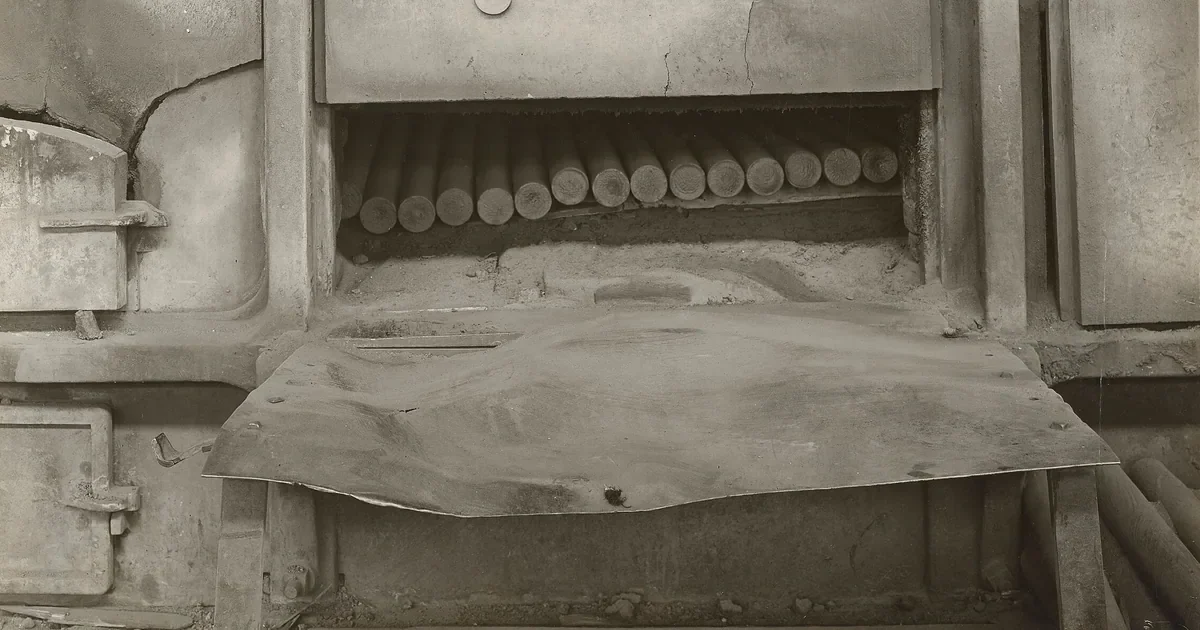
EN 12164 specifies composition, property requirements and dimensional tolerances for copper alloy rod made for free machining, with sampling and test methods. The 2016 edition was replaced by EN 12164:2024, published in October 2024, which changed the composition of CW614N and CW617N among others. Name the edition year, the grade code, the tensile class and the certificate on every order.
EN 12164 is the European product standard for copper alloy rod made for free machining: it sets the composition, property requirements and dimensional tolerances of the bar a shop feeds into a lathe, and the sampling and test methods that check them. The current edition is EN 12164:2024, published in October 2024, and it changed the composition of CW614N and CW617N among other grades. This post is part of our guide to brass grades. It covers the three editions, the 2024 changes and how to cite the standard on a drawing.
We do not certify parts or give legal advice. The standard text is paywalled and I did not read it. This post uses only what the BSI and DIN catalogue pages and mill and distributor datasheets publish, all opened in October 2026, and it replaces nothing in the standard.
Checked October 2026.
What the standard is
The BSI catalogue page for BS EN 12164:2024 gives the scope in one sentence: it specifies the composition, property requirements and dimensional tolerances for copper alloy rod for free machining purposes, and it covers sampling procedures and test methods for verifying conformity. The DIN catalogue summary of the 2016 edition adds the product forms: rod finished by drawing or extrusion, in round, square, hexagonal or octagonal form.
It is a European Standard, adopted nationally, so the same text appears as BS EN, DIN EN and so on. Mill datasheets list it as the standard for “rods (free machining purposes)”, next to EN 12165 for forging stock, EN 12167 for profiles and EN 12168 for hollow rod. Hollow rod, profiles and forging stock sit in other standards, listed below.
Three editions to tell apart
| Edition | Status in the catalogue pages | What the catalogue says changed |
|---|---|---|
| EN 12164:2011 | Replaced by the 2016 edition | Base edition for the 2016 changes |
| EN 12164:2016 | DIN issue November 2016, withdrawn, superseded by 2024-12 | Four low-lead alloys added (CW605N, CW625N, CW626N, CW725R), CW611N composition changed, optional reference to the 4MS drinking water list, dezincification requirements and test methods modified, surface quality added |
| EN 12164:2024 | BSI published 31 October 2024, DIN issue December 2024, current | See the next section |
Sources: DIN Media pages for the 2016 and 2024 editions and the BSI page for the 2024 edition, opened October 2026. I did not read the texts.
Datasheets and drawings from before late 2024 usually cite 2011 or 2016, and a datasheet often does not state an edition at all. That is not an error on the supplier’s part. It is a reason to write the edition year on your own order.
What changed in 2024
The DIN catalogue page lists the changes from the 2016 edition. The ones that matter to a buyer:
- The chemical composition of four leaded alloys in Table 7 was changed: CuZn39Pb3 (CW614N), CuZn40Pb2 (CW617N), CuZn35Pb1,5AlAs (CW625N) and CuZn33Pb1,5AlAs (CW626N).
- A new alloy, CuZn40Pb1 (CW627N), was added to the tables.
- The composition of CuZn33Pb1AlSiAs (CW725R) changed, and CuZn36Si1P (CW726R) was added.
- Two silicon-copper alloys, CW245E and CW246E, and the nickel silver CW407J were added.
- Eddy current test parameters (section 6.6) and a requirement on internal inclusions (section 6.7) were added.
- The shape and size of tensile test specimens changed, the diameter and across-flats specification in 6.5.1 was revised, and straightness has a new figure and new values in Table 18.
The page lists more items, including new tables and an annex. The first bullet is the one that bites. A composition table for CW614N copied from a datasheet written to the 2011 or 2016 text may not match the 2024 limits. The straightness and tolerance changes matter where the original bar surface stays on the part, for instance a hex fitting cut from hex bar.
What a datasheet shows and does not show
A UK distributor’s CW614N sheet, updated December 2024 and not naming an edition, gives for the grade a copper range of 57.00 to 59.00 percent, lead 2.50 to 3.50 percent, and for round bar 6 to 80 mm in diameter a tensile strength of 360 to 500 MPa, proof stress of 230 to 350 MPa, hardness 90 to 160 HB and elongation from 20 down to 5 percent. The ranges span several tempers, which is the point: the tensile class and hardness depend on the temper and the size, and no single figure describes the bar. The sheet says the data is indicative and that mechanical requirements vary widely with temper, product and dimensions.
A mill sheet for CW603N gives reference values, 61.0 percent copper and 2.8 percent lead, and states that strength and hardness are specified in the product standards. Reference values are not limits. For a drawing you want the limits and the tempers from the standard itself, or from the mill certificate for the lot.
Need a quote for this part? Get a quote for your brass parts
Where EN 12164 meets other standards
- Forging stock is EN 12165, a separate document. BSI lists the 2016 edition as withdrawn on 17 October 2024. The same grade code can appear under both, so name the product standard to match the process.
- Profiles are EN 12167 and hollow rod EN 12168, according to a mill datasheet.
- The US equivalent for bar is ASTM B16/B16M for C36000 and C36010. The two standards write composition, tempers and tolerances in their own terms. See ASTM B16 brass rod.
- Drinking water. The 2016 edition introduced an optional way of referencing the 4MS composition list. I could not confirm how the 2024 edition words it, so check the clause if your part is a drinking water part.
The cross reference page pairs UNS and EN grades, as nearest matches only.
How to cite it
Write the standard with its edition year, the grade by code and chemical name, the tensile class or hardness, the product form with its tolerance class and the certificate.
Material: CuZn39Pb3 (CW614N) rod for free machining
per EN 12164:2024, tensile class as drawn, hex bar
across flats and tolerance class as drawn.
CW617N (CuZn40Pb2) acceptable only with written approval.
Mill certificate EN 10204 3.1 with composition,
tensile class and heat number.
Where buyers misread it
- A grade code is not a standard. CW614N appears in several European standards. EN 12164 governs it as free-machining rod, and a mill sheet lists it under EN 12165 as forging stock too.
- A table copied from an older source. After 2024 the composition limits for several leaded grades changed. Ask for the certificate and compare it with the edition on your order.
- A distributor sheet is not the standard. It is indicative, and it may span several tempers.
- A leaded grade in the standard is not a lead-free grade. The standard also lists lower-lead alloys, such as CW605N and the silicon brass CW724R, but whether any grade meets a drinking water rule is a separate check.
What to write in your spec
- EN 12164 with the edition year you require.
- The grade by CW code and chemical name.
- The tensile class or hardness temper, and the bar size it applies to.
- The diameter or across-flats tolerance class and straightness if the bar surface stays on the part.
- The certificate type, with composition, temper and heat number.
- Which equivalents you accept, with written approval before shipment, as set out in brass grade substitution.
Have a European drawing to quote? Send the drawing with the standard, edition and grade marked. We quote the finished parts within 24 business hours and place the work with one of the partner shops that turn brass. If you are still choosing the grade, start from the guide to brass grades.
See also the forging stock standard: EN 12165 and its 2024 changes.
Frequently asked questions
What does EN 12164 cover?
The BSI catalogue page says it specifies the composition, property requirements and dimensional tolerances for copper alloy rod for free machining purposes, plus sampling and test methods. The DIN summary of the 2016 edition adds round, square, hexagonal and octagonal rod finished by drawing or extrusion. The text is paywalled and I did not read it.
Which edition of EN 12164 is current?
EN 12164:2024. BSI lists it as published on 31 October 2024, and DIN lists DIN EN 12164:2024-12 as current, replacing the 2016 edition. DIN lists the 2016 edition as withdrawn. Older drawings and datasheets may still cite 2011 or 2016, so write the edition year you require.
Did the 2024 edition change CW614N and CW617N?
The DIN list of changes says the chemical composition of four leaded alloys in Table 7 was changed: CW614N, CW617N, CW625N and CW626N. I could not read the new limits. A composition table copied from an older datasheet may not match the 2024 limits, so check the certificate against the edition on your order.
Is EN 12164 the standard for forging brass?
No. Forging stock has its own standard, EN 12165, which a mill datasheet lists next to EN 12164 for the same grade codes. BSI lists the 2016 edition of EN 12165 as withdrawn on 17 October 2024. Name the standard that matches the product, because a grade code alone does not say which one applies.
Alloys in this guide
| Alloy | Lead % | Mach. | DZR |
|---|---|---|---|
| C385 architectural bronzeC38500 · CuZn39Pb3 / CW614N | 2.5 to 3.5 | 90 | Poor |
| CW617N CuZn40Pb2C37700 (nearest) · CuZn40Pb2 / CW617N | 1.6 to 2.5 | 80 | Poor |
| C360 free-cutting brassC36000 · CuZn36Pb3 / CW603N | 2.5 to 3.7 | 100 | Poor |
Published typical values for the alloy. Machinability against C360 at 100. Not a promise from a shop.
Sources
- BSI, BS EN 12164:2024 copper and copper alloys, rod for free machining purposes (catalogue page) knowledge.bsigroup.com
- DIN Media, DIN EN 12164:2024-12 (catalogue page with list of changes from the 2016 edition) dinmedia.de
- DIN Media, DIN EN 12164:2016-11 (withdrawn edition, catalogue page with scope and changes from 2011) dinmedia.de
- BSI, BS EN 12165:2016 forging stock (withdrawn 17 October 2024, catalogue page) knowledge.bsigroup.com
- Diehl Brass Solutions, material datasheet 002 (CuZn39Pb3, CW614N, products and standards) diehl.com
- Diehl Brass Solutions, material datasheet 205 (CuZn36Pb3, CW603N) diehl.com
- Righton Blackburns, CW614N (CZ121) bar datasheet, updated December 2024 (distributor sheet, edition not stated) rightonblackburns.co.uk
Need a quote for this part?
Send the drawing. We read it, send one itemised quote for the finished parts within 24 business hours and place the work with a partner shop that turns brass. Brass only.
Get a quote for your brass parts