Guides / Materials
How to Approve or Refuse a Brass Grade Substitution: Eight Steps and the Sign-Off Wording
Published November 21, 2026. Reviewed for the facts in the corrections log.
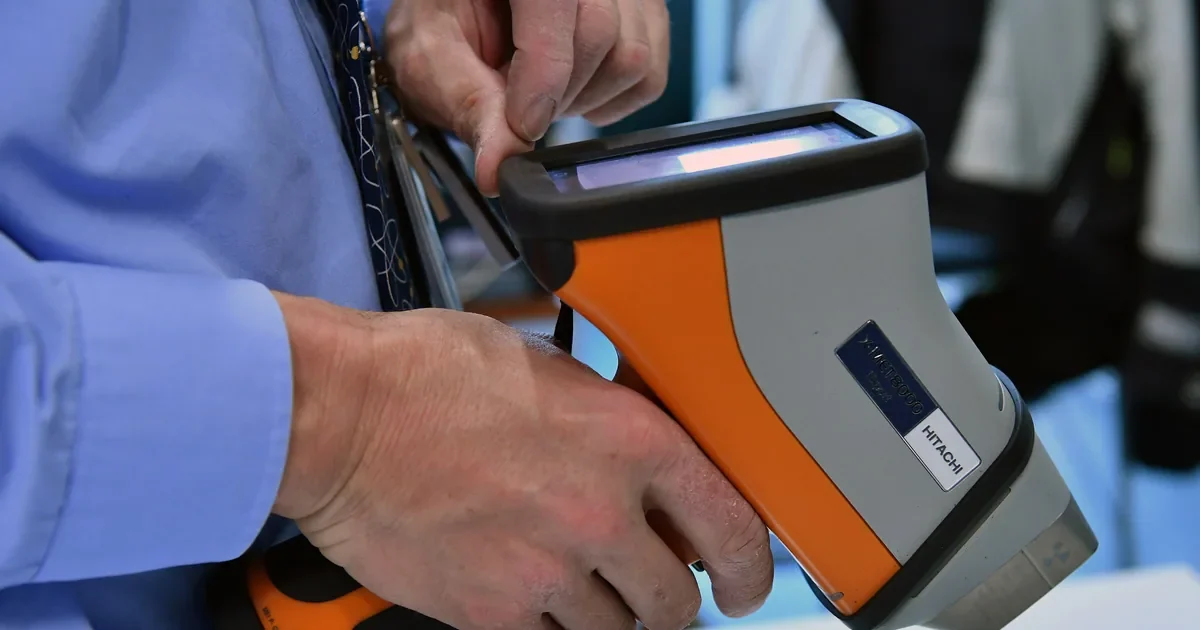
Accept a substitute brass grade only after you compare its certificate chemistry with the limits of the grade you drew, check that the lead rule on the order still holds, match the temper and the standard edition, gauge a first article thread and sign the swap in writing. A shop's word equivalent is a claim. Approval is your decision.
A shop that offers an equivalent grade is making a claim, not a decision. Whether the swap is acceptable depends on details that sit below the grade name: the lead range, the temper, the edition of the standard, how a thread cuts and what paperwork comes with the bar. This post is part of our guide to brass grades. It gives eight steps to approve or refuse a substitution, a table of common swaps and the wording for the sign-off.
We name no shop and we do not certify parts or give legal advice. Figures are Copper Development Association (CDA) alloy-page values and mill and distributor datasheet values opened in October 2026. They describe the alloy, not any shop.
Checked October 2026.
Before you start
You need: the drawing with its material line, the rule or environment the part must meet, the grade the shop proposes (code, chemical name and standard), and the datasheet or certificate for it.
Who does it: the buyer’s engineer, with the shop’s technical contact. A purchasing clerk can collect the documents but should not sign the swap.
Time (an assumption, not a measured figure): about one email round trip if the datasheet is at hand. Longer if the shop has to ask the mill for a certificate.
The eight steps
1. State what must be true
Write the requirement behind the grade: the lead rule, the water or seawater service, the process (turned, forged, formed) and the load. A drawing that carries only an alloy name tells the shop one bar it can buy, not what has to hold. Failure point: the shop then guesses which property matters and optimizes the wrong one.
2. Get the proposed grade in full
Ask for the grade by code and chemical name, the standard and the edition year. Failure point: a nearest match presented as the same alloy. A distributor’s CW614N sheet says the grade corresponds to UNS C38500 but may not be a direct equivalent. A mill sheet pairs CW617N with C38000, while other tables pair it with C37700, and the CDA’s two compositions differ.
3. Compare the composition limits
Put the limits of the drawn grade next to the limits of the proposed grade, element by element, for copper, lead, iron, tin and anything your part is sensitive to. The table shows how much can differ between swaps that look routine.
| Swap | What differs (CDA page values) | What to check |
|---|---|---|
| C36000 to C38500 or CW614N | Copper 60.0 to 63.0 against 55.0 to 59.0 percent. Lead 2.5 to 3.0 against 2.5 to 3.5. Machinability 100 against 90 | Color match on visible parts, certificate chemistry, standard edition |
| C37700 to C38000 or a CW617N bar | Copper 58.0 to 61.0 against 55.0 to 60.0. Lead 1.5 to 2.5 for both. C38000 allows tin to 0.30 and aluminum to 0.50 percent | That the stock is forging stock, not turning bar, and its standard |
| C36000 to CW603N | Mill sheet pairs them. Lead and temper wording differ between ASTM and EN | Lead figure on the certificate, temper named in the standard’s terms |
| Forging stock to turning bar of the same grade | Same code, different product and standard | Whether the property you need survives the process |
| Leaded grade to a lead-free grade | Different alloy, different machinability | The rule on the order, stock, cycle time |
CDA lists C36000 at 2.5 to 3.0 percent lead and a separate number, C36010, at 3.1 to 3.7. This site’s datasheet, shown in the box on this page, gives the two combined as 2.5 to 3.7.
Sources: CDA alloy pages for C36000, C38500, C37700 and C38000, and mill and distributor datasheets, opened October 2026.
Failure point: comparing the typical figure with the limit. Compare limits with limits, or the certificate’s actual figures with the limits.
4. Check the rule on the order
If the part has a lead limit, a drinking water rule or a customer specification, the substitute has to meet it on its own merits. Both C36000 and C38500 are leaded grades with lead far above any lead-free limit, so a swap between leaded grades does not change a lead rule. A swap into or out of a lead-free grade does. Failure point: assuming a swap is neutral because both grades are brass.
5. Match the temper and the edition
US rod is sold by temper such as half hard (H02) under ASTM B16/B16M. European rod is sold under EN 12164 in tempers named in the European system. The two systems do not map one to one. EN 12164 was revised in 2024, and the EN 12164 post lists what the catalogue says changed, so the edition decides what the certificate is measured against. Failure point: a certificate to an older edition than the one on the order.
6. Check properties that depend on how the bar is made
Some properties are set by heat treatment and product form, not by the grade code. A mill datasheet for CW602N rod for machining says the bar is dezincification-resistant as delivered, and that processing above 600 degrees Celsius impairs it and an anneal at 500 to 550 degrees restores it. The datasheet for CW602N forging stock says it is not resistant as delivered and needs 2 hours at 500 to 550 degrees after forging. Swapping one for the other changes the answer. Failure point: a grade code accepted without its product form and condition.
7. Run a first article on the thread and the cut
Lead range and temper change chip form, tool wear and how a thread gauges. CDA’s machinability ratings on its C360 = 100 scale are 100 for C36000, 90 for C38500 and 80 for C37700. They are an ordering, not a cycle time, and another maker’s scale may put the grades in a different order. Ask for the first article gauged on the actual thread gauge, and the cycle time quoted on each grade. Failure point: approving on paper and finding a thread that gauges differently in the first lot.
8. Approve in writing and keep the paper
Write the approval for this order, with conditions, and keep the certificate. Failure point: a verbal yes that nobody can find when the part is questioned.
What good output looks like
One page: the drawn grade and the proposed grade by code, chemical name, standard and edition; the two sets of limits side by side; the certificate figures for the actual lot inside the limits you named; the temper, in the standard’s terms; the first article result; and a signed line. If any row is blank, the swap is not yet approved.
Need a quote for this part? Get a quote for your brass parts
Sample sign-off wording
Substitute material, order 1234, drawing rev B.
Drawn: C36000 per ASTM B16/B16M-24, half hard (H02).
Proposed: CW614N (CuZn39Pb3) per EN 12164:2024, tensile class as drawn.
Approved for this order only on these conditions:
1. Certificate EN 10204 3.1 shows composition inside the limits
   listed on the attached comparison, lead included.
2. First article thread gauged go/no-go before the run.
3. No further substitution without written approval.
Name, date.
Checklist to copy
- Requirement written on the drawing, not only the alloy.
- Proposed grade named by code, chemical name, standard and edition.
- Limits compared with limits, element by element.
- Lead rule or market rule re-checked for the substitute.
- Temper named in the standard’s own terms.
- Product form and condition checked (bar or forging stock, heat treatment).
- First article gauged on the real thread gauge.
- Certificate with composition and heat number received.
- Approval signed and filed with the order.
If a shop holds only a grade you did not draw and the part has no rule that rules it out, a swap is often a good deal for both sides. The aim of the steps is that the deal is made with the paper in hand. The posts on grade equivalents and ASTM B16 cover the cross-reference and the US bar standard.
Next step
If you have a drawing and want shops to propose grades, send the drawing and write what the part must survive, with the acceptable grades listed. We quote the finished parts within 24 business hours and place the work with one of the partner shops that turn brass. To see how the grades compare before you decide, start from the guide to brass grades.
Frequently asked questions
Can a shop swap C360 for CW614N without asking?
It should not. The two are close, and a shop in Europe may well hold CW614N bar, but the lead range, the copper range, the temper system and the standard differ. A datasheet I opened says CW614N corresponds to UNS C38500 but may not be a direct equivalent. Ask the shop to propose the swap and approve it in writing.
What evidence proves a substitute grade is acceptable?
The mill certificate for the bar lot, showing chemical composition against the limits of the grade you drew, the temper, the standard and its edition, and the heat number. A datasheet shows the grade in general. Only the certificate shows the bar you will receive. Ask for it before the shop cuts material.
Does a substitute grade change the price?
It can, in both directions. A grade the shop already holds can shorten the wait and lower the bar cost. A grade rated lower for machinability, such as 80 against 100 on the CDA scale, can lengthen the cycle. Ask for the quote on each grade, as the swap should be priced and not just assumed.
Is a lead-free substitute allowed when the drawing says leaded?
The drawing sets that. Many parts have no lead limit and a lead-free grade would be a cost with no benefit, but a lead-free grade also cuts differently and is held by fewer stockists. If the part has a lead rule, write the rule on the drawing and let the shop offer any grade that meets it. Our guide to brass grades shows how.
Alloys in this guide
| Alloy | Lead % | Mach. | DZR |
|---|---|---|---|
| C360 free-cutting brassC36000 · CuZn36Pb3 / CW603N | 2.5 to 3.7 | 100 | Poor |
| C385 architectural bronzeC38500 · CuZn39Pb3 / CW614N | 2.5 to 3.5 | 90 | Poor |
| C377 forging brassC37700 · CuZn39Pb2 / CW612N | 1.5 to 2.5 | 80 | Poor |
| CW617N CuZn40Pb2C37700 (nearest) · CuZn40Pb2 / CW617N | 1.6 to 2.5 | 80 | Poor |
| CW602N DZR brassNo direct UNS equivalent · CuZn36Pb2As / CW602N | 1.7 to 2.8 | 80 | High |
Published typical values for the alloy. Machinability against C360 at 100. Not a promise from a shop.
Sources
- Copper Development Association, alloy data C36000 free-cutting brass alloys.copper.org
- Copper Development Association, alloy data C38500 architectural bronze alloys.copper.org
- Copper Development Association, alloy data C37700 forging brass alloys.copper.org
- Copper Development Association, alloy data C38000 alloys.copper.org
- Diehl Brass Solutions, material datasheet 003 (CuZn40Pb2, CW617N, UNS C38000) diehl.com
- Diehl Brass Solutions, material datasheet 410 (CW602N, rods for machining) diehl.com
- Diehl Brass Solutions, material datasheet 402 (CW602N, forging stock) diehl.com
- Righton Blackburns, CW614N (CZ121) bar datasheet, updated December 2024 (distributor sheet) rightonblackburns.co.uk
Need a quote for this part?
Send the drawing. We read it, send one itemised quote for the finished parts within 24 business hours and place the work with a partner shop that turns brass. Brass only.
Get a quote for your brass parts