Guides / Materials
Brass Applications: Where Machined Brass Is Used and the Rule Each Use Brings
Published November 21, 2026. Reviewed for the facts in the corrections log.
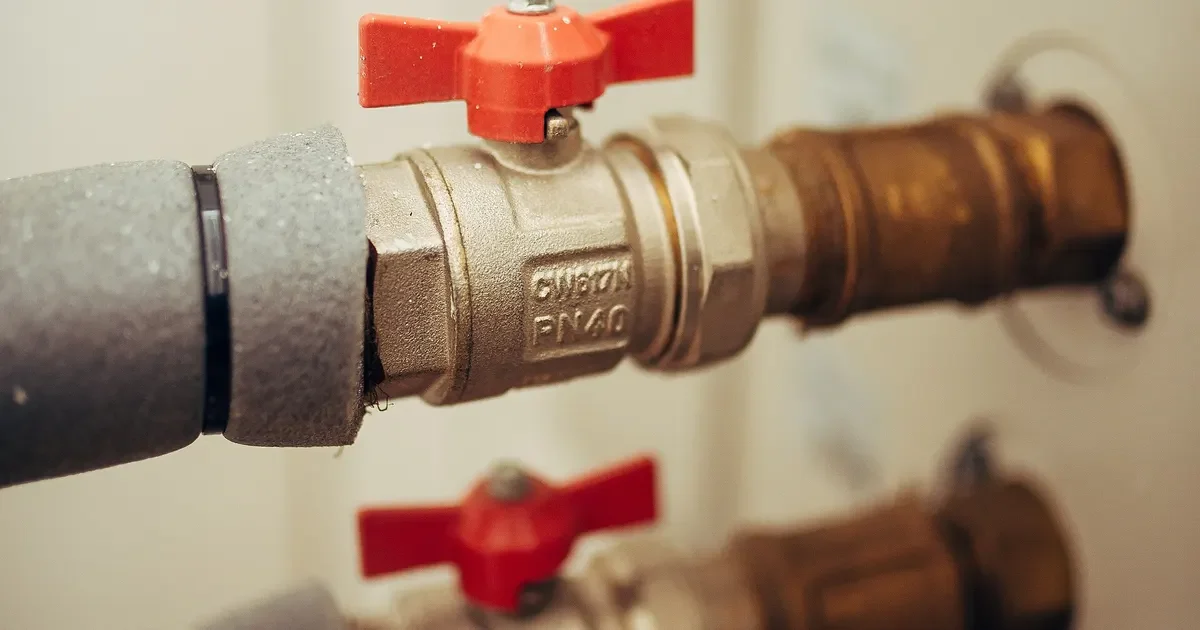
Machined brass is used where a part needs fine threads, a sealing face and corrosion resistance at a moderate price: water and gas valves, refrigeration and pneumatic fittings, electrical terminals, lock cylinders, sprinkler parts, marine and decorative hardware. Each use brings its own rule, from the 0.25 percent lead limit in drinking water to ammonia cracking.
Brass sits inside more products than most buyers notice. The valve under a sink, the regulator on a gas bottle, the fitting on an air line, the pin in a plug, the cylinder in a front door lock and the frame of a fire sprinkler are all machined brass. The same few alloys cover all of them.
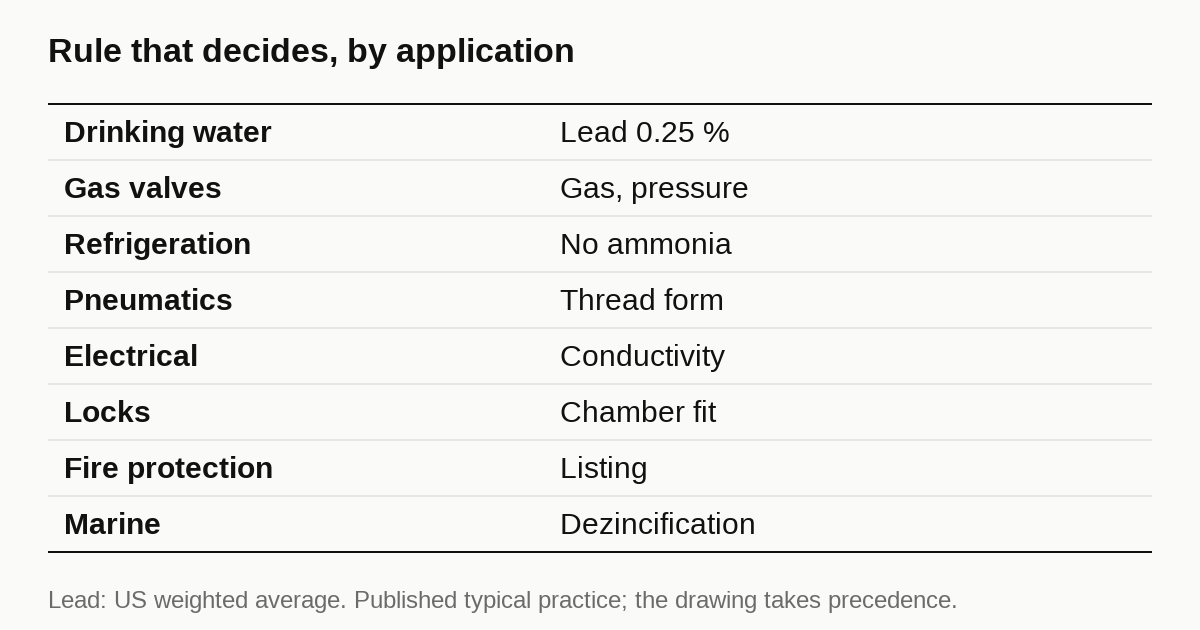
What changes from one use to the next is the rule that decides the grade and the drawing. Drinking water brings a lead limit. Refrigeration brings ammonia. Seawater brings dezincification. This guide maps the main applications, the parts in each and the rule a buyer must write down. Figures are published typical values, not a promise from any shop.
Why brass shows up in so many products
Five properties explain most uses of brass.
It machines fast. Free-cutting brass C360 is the reference for machinability at 100. Chips break short, tools last and a bar-fed lathe turns a fitting in seconds. See brass CNC machining for the process.
It holds a thread and a seal. Brass takes fine threads and smooth sealing faces without tearing, and a brass thread does not gall against itself the way stainless can.
It resists corrosion. Brass does not rust. In clean water and damp air it forms a thin film and stays serviceable for decades.
It does not spark. A struck brass part does not throw sparks, which matters in gas and fuel equipment.
It looks good and takes plating. Polished brass is a finish in itself, and it plates well with nickel, chrome, tin or gold.
The trade-offs are just as clear. Brass is heavy at about 8.5 g/cm3, weaker than steel, a modest conductor next to copper and vulnerable to two specific attacks: dezincification and stress corrosion cracking. Good applications work around those limits.
Applications at a glance
| Application | Typical machined parts | Usual grade | The rule that decides |
|---|---|---|---|
| Drinking water plumbing | Valve bodies, stems, fittings, adapters | C69300, bismuth brass, CW511L | Lead limit, 0.25 percent weighted average in the US |
| Water meters | Meter bodies, couplings, nuts | Lead-free or DZR grades | Drinking water rules plus meter standards |
| Gas valves and regulators | Bodies, stems, seats, orifices | CW617N, C377, C360 | Gas type, pressure, leak test |
| Refrigeration and HVAC | Flare nuts, service valves, access fittings | C377, CW617N, C360 | Cleanliness, leak test, no ammonia |
| Pneumatics | Push-in bodies, adapters, couplings | C360, CW614N, nickel plated | Thread form, burr-free bores |
| Electrical | Terminals, pins, studs, binding posts | C360, C260 | Conductivity, plating, fit |
| Locks and security | Plugs, housings, pins, cams | C360 | Tolerance on pin chambers, finish |
| Fire protection | Sprinkler frames, hose valves, couplings | C377, C360 | Product listing, stress corrosion |
| Marine | Deck hardware, fittings above the waterline | C464, CW602N | Dezincification, galvanic pairs |
| Decorative hardware | Knobs, pulls, hinges, fixtures | C360, C385 | Color match, finish |
| Heat exchangers | Tube plates, ferrules | C443 admiralty | Water chemistry |
Typical practice for each sector. The product standard and the drawing take precedence over this table.
Water: the lead rule
Drinking water is the largest use of machined brass, and it carries the strictest material rule. In the US, NSF/ANSI 372 and the Safe Drinking Water Act limit wetted surfaces to a 0.25 percent weighted average lead content. That rules out leaded C360 for the wetted parts and brings in C69300 silicon brass, bismuth brass or CW511L, all slower to machine. See leaded vs lead-free brass and NSF 61 and 372 for brass fittings.
Water meters add metrology standards on top of the lead rule. See brass water meter bodies. Garden hose fittings sit outside the drinking water rule but may carry warning rules, covered in brass hose barbs and lead limits.
In chloride-rich or soft water, ordinary yellow brass can lose zinc and turn porous. Dezincification resistant brass such as CW602N is the usual answer, tested to ISO 6509. See dezincification resistant brass.
Gas, refrigerant and compressed air
Gas, refrigerant and air are less forgiving than water. A weep in a water line drips. A weep in a gas line is a hazard, and a refrigerant leak empties the system.
Gas. Bodies are usually hot stamped from CW617N or C377 and then machined. Stems, seats and orifices are turned from C360. Acetylene needs brass under 65 percent copper. See brass gas valve and regulator parts.
Refrigeration and HVAC. Flare nuts, service valves and access fittings are brass. The parts must be clean and dry, and the joint is leak tested. Ammonia refrigeration cannot use brass, because ammonia attacks copper alloys. See brass refrigeration and HVAC fittings.
Pneumatics. Push-in fittings, adapters and quick couplings are nickel plated brass. Bores must be free of burrs so they do not cut O-rings or tubing. See brass pneumatic fittings.
All three share one test: pressure and leak. See brass valve body leak and pressure testing and O-ring grooves in brass.
Electrical parts
Free-cutting brass carries about 26 percent of the conductivity of pure copper. That is enough for turned terminals, pins, studs and binding posts at moderate current, and brass wins on machining speed and thread strength. Plating, a nickel underlayer below gold or silver and fit after plating decide whether the contact lasts. See brass electrical terminals and connectors and the contact pins and terminals part page.
Electronics sold in the EU fall under RoHS. Lead in copper alloys is covered by exemption 6(c), which is set to expire on 30 June 2027. See RoHS exemption 6(c).
Need a quote for this part? Get a quote for your brass parts
Hardware, locks and fire protection
Locks. Plugs, housings and pins in pin tumbler cylinders are commonly brass. It machines to the fine tolerances a shear line needs and does not seize after years outdoors. See brass lock cylinder parts.
Decorative hardware. Knobs, pulls, hinges and fixtures are turned and polished, then lacquered, plated or left to patina. Color varies from lot to lot, so a master sample matters. See decorative brass hardware and knurled knobs and thumb screws.
Fire protection. Sprinkler frames, deflectors, hose valves and couplings are often brass. The listing belongs to the finished product and its maker, not to the part. Brass under stress near ammonia can crack, so stress relief at 330 to 350 C is often written on the drawing. See brass fire sprinkler parts and brass stress corrosion cracking.
Marine and heat transfer
Brass works on boats above the waterline: deck hardware, lamp fittings, instrument cases and freshwater fittings. In seawater, ordinary yellow brass dezincifies. Naval brass C464 with its tin addition and DZR grades hold up better. Below the waterline, through-hulls and seacocks are normally bronze, which this site does not quote. See brass marine hardware.
Heat exchangers use admiralty brass tube, with ferrules and tube plates cut from it. See admiralty and arsenical brass.
Small precision parts in every sector
Some brass parts cross all the sectors above.
- Threaded inserts moulded or heat set into plastic housings. See brass inserts for plastic.
- Standoffs and spacers in electronics.
- Nozzles for spray, fuel and welding torches.
- Bushings and plain bearings at low load and speed.
- Hose barbs and adapters for every fluid line.
- Compression ferrules that seal tube joints.
Most are turned on Swiss-type or multi-spindle lathes. See Swiss machining brass and the processes page.
Where brass is the wrong choice
Brass is not the answer to every part. It is the wrong choice in these cases.
| Need | Why brass falls short | Usual material |
|---|---|---|
| High load or high stress | Lower strength than steel | Steel or high-tensile alloys |
| Springs and spring contacts | Loses spring force, relaxes | Phosphor bronze, beryllium copper, spring steel |
| Ammonia service | Stress corrosion cracking | Steel, stainless |
| Below the waterline at sea | Dezincification | Bronze |
| High current bus bars | Conductivity about a quarter of copper | Copper |
| Light weight | Density about 8.5 g/cm3 | Aluminium |
General guidance. The design engineer decides the material for the product.
This site quotes brass only. If your part needs one of the materials on the right, a shop that works in that metal is the better route. For the close calls, see brass vs stainless steel, brass vs aluminium and brass vs plastic fittings.
How the application changes the drawing
The application should be on the drawing, because it decides the grade, the test and the finish. A shop that knows the part is for drinking water, gas or refrigerant quotes the right bar and the right test.
Application: drinking water valve stem, US market.
Material: lead-free brass C69300 or bismuth brass, wetted surface.
Weighted average lead content 0.25 percent maximum per NSF/ANSI 372.
Threads per ASME B1.20.1 (NPT). Burr-free bores, Ra 1.6 on sealing faces.
Pressure test per the product standard. Material certificate EN 10204 3.1.
Checklist
- Application and market named on the drawing.
- Grade chosen for the rule of that application: lead, dezincification, ammonia, conductivity.
- Product standard named, with the test the part must pass in the assembly.
- Threads and sealing faces specified with a tolerance and finish.
- Plating or finish named, with dimensions stated after plating where it matters.
- Material certificate requested. See EN 10204 3.1 certificates.
Not sure which grade fits? Try the grade selector. Need machined brass parts for one of these applications? Send the drawing with the application named. We quote the finished parts within 24 business hours and place the work with one of the partner shops that turn brass.
Frequently asked questions
What is brass mainly used for?
Most machined brass goes into parts that carry or control a fluid: water and gas valves, fittings, adapters and meter bodies. The next large groups are electrical parts such as terminals and contact pins, hardware such as lock cylinders, knobs and hinges, and small precision parts such as nozzles, inserts and standoffs.
Why is brass used instead of steel for fittings?
Brass machines several times faster than steel, takes fine threads cleanly, resists corrosion in water and damp air without plating and does not seize in a threaded joint. Steel is stronger and cheaper by weight, so it wins on highly loaded parts. For small sealed fluid parts, brass usually costs less once machining time is counted.
Which brass grade suits which application?
Leaded free-cutting brass such as C360 or CW614N suits most turned parts. Forging brass such as C377 or CW617N suits hot stamped valve and fitting bodies. Drinking water parts in the US need a lead-free grade such as C69300 or bismuth brass. Damp or chloride service calls for a dezincification resistant grade such as CW602N.
Alloys in this guide
| Alloy | Lead % | Mach. | DZR |
|---|---|---|---|
| C360 free-cutting brassC36000 · CuZn36Pb3 / CW603N | 2.5 to 3.7 | 100 | Poor |
| CW617N CuZn40Pb2C37700 (nearest) · CuZn40Pb2 / CW617N | 1.6 to 2.5 | 80 | Poor |
| C69300 silicon brassC69300 · CuZn21Si3P / CW724R | under 0.09 | 80 | High |
| CW602N DZR brassNo direct UNS equivalent · CuZn36Pb2As / CW602N | 1.7 to 2.8 | 80 | High |
| C464 naval brassC46400 · CuZn38Sn1 / CW712R | under 0.20 | 30 | High |
| C260 cartridge brassC26000 · CuZn30 / CW505L | trace | 30 | Poor |
Published typical values for the alloy. Machinability against C360 at 100. Not a promise from a shop.
Sources
- Wikipedia, Brass en.wikipedia.org
- Wikipedia, Dezincification en.wikipedia.org
Need a quote for this part?
Send the drawing. We read it, send one itemised quote for the finished parts within 24 business hours and place the work with a partner shop that turns brass. Brass only.
Get a quote for your brass parts