Guides / Process
Machining Decorative Brass Knobs and Pulls: Keeping the Finish Consistent Across Lots
Published October 11, 2026. Reviewed for the facts in the corrections log.
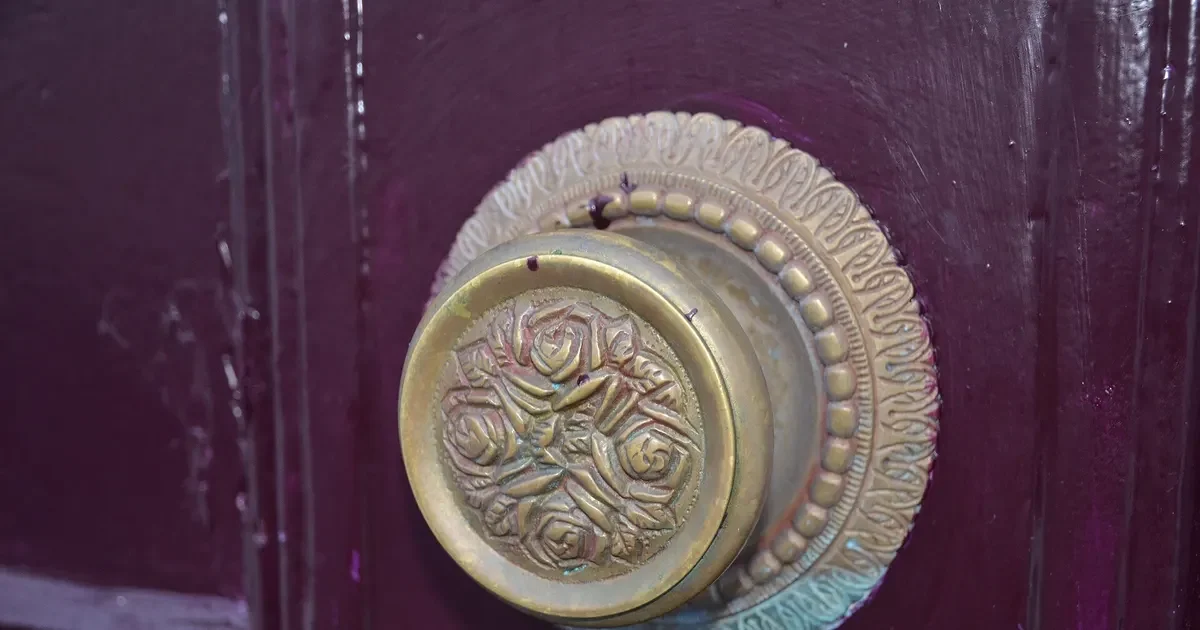
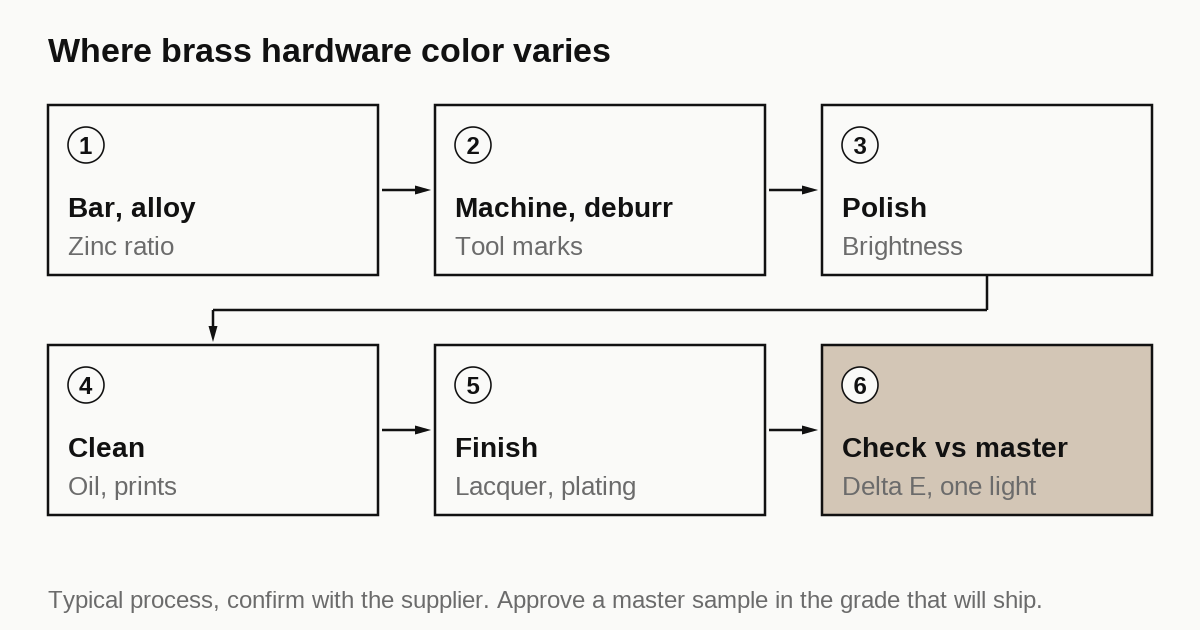
Brass knobs and pulls are turned from free-cutting brass, then polished and finished by lacquer, patina or plating. Color varies from lot to lot with alloy, polish and finish process, so approve a master sample, measure color difference and keep bar from one source. Lead-free alloys shift the color, so match the sample to the grade you will ship.
A brass cabinet knob is a small thing that gets looked at and handled every day. It has to feel solid, look the same as the others in the set and keep its finish for years. Machining it is the easy half. Keeping the finish consistent across lots, across months and across a change of alloy is the hard half, and it is where most complaints start.
This post covers the grades, the dimensions that matter, the finish routes and a practical way to control color. Figures are typical, not a promise from any shop.
Grades and forms
Most turned knobs, pulls and backplates use C360 free-cutting brass, which turns fast and takes a bright polish. Pulls and handles with a profile, such as bar pulls and edge pulls, often start as extruded sections of C385 architectural bronze, which is a brass despite the name and polishes well. Cast knobs exist, but porosity shows up as pits under a polish, so a cast part needs more finishing work.
Lead-free hardware is growing, since consumers handle it and some markets and brands ask for it. C69300 silicon brass is the usual lead-free grade. It turns slower and is harder, and its color is a little different, as the next section shows. See leaded vs lead-free brass.
Why color varies
The color of brass follows its zinc to copper ratio, as covered in red, yellow and cartridge brass. A bar that is a half percent richer in zinc looks a little paler. Mills hold composition inside a range, not at a point, so two heats of the same grade can differ slightly. Other causes stack on top.
| Cause | Effect on color | Control |
|---|---|---|
| Alloy composition and heat | Tone shifts with zinc and trace elements | Single mill, certificate with chemistry, one heat per set where possible |
| Alloy family | Silicon brass looks redder, bismuth brass near golden | Match samples to the shipped grade |
| Polish compound and time | Brightness and a faint tint | Written polishing standard |
| Surface prep | Haze, orange peel, tool marks show through | Surface finish before polish stated |
| Lacquer thickness and type | Yellowing, a warmer tone | Specified coating and thickness |
| Patina or plating batch | Depth of antique finish, plating tone | Batch size limits, master comparison |
| Light and viewing | Same part looks different under different lamps | Approve under a stated light |
Typical causes of color variation. A shop’s finishing records and the approved master take precedence.
Finish routes
Polished and lacquered. The part is buffed to a bright finish and coated with a clear lacquer so the brass does not tarnish. The look is bright gold. The lacquer is the weak point: it can yellow, chip at edges or let tarnish creep in from a scratch. A US finish code for bright lacquered brass is BHMA 605, and satin brass is 606, as listed in ANSI/BHMA A156.18. Use these codes where a US customer expects them.
Satin and brushed. A brushed or bead-blasted surface hides fingerprints and tool marks and gives a softer look. Consistency depends on the brush grit and direction, so state both. Satin finishes tend to show less lot to lot variation than mirror polish.
Unlacquered, living finish. The brass is polished and left bare, and it darkens naturally with handling. Customers who want this must be told it will age and differ part to part. Lot consistency is a different standard here.
Antique and patinated. A chemical treatment darkens the surface to a brown or black, then it is highlighted by buffing and sealed. Depth and evenness vary with bath age, time and temperature, so each batch can differ. Master samples and batch limits are vital.
Plated. Nickel, chrome and brass-look coatings are applied over polished brass. Plating covers alloy color differences, which is an advantage for consistency, but it adds the plating process as a source of variation. Cleaning before plating decides adhesion, as covered in cleaning brass parts before plating, and brass surface finishes and plating lists the options.
PVD coatings. Thin vacuum-deposited layers give a durable gold or dark tone, and consistency is good within a coating run.
Machining dimensions that matter
Center spacing on pulls. Pulls fit holes already drilled in cabinets, so the distance between mounting holes must be right. Common spacings are 76 mm, 96 mm and 128 mm, with larger sizes for long pulls. A tolerance of about plus or minus 0.1 mm keeps sets fitting. Give the center distance, not only the overall length.
Threads. Knobs commonly use M4 or 8-32 studs and pulls use M4 or 8-32 screws. A thread that is tight or damaged by plating causes returns. Gauge after finishing, as in thread gauging brass fittings.
Surface before polish. A tool mark or a pit that a machinist ignores can show as a streak after polishing. State a surface finish, typically Ra 0.8 or finer, on visible faces. See brass tolerances and surface finish.
Edges and knurls. Visible edges need a controlled radius, not a sharp burr. Knurled bands should be clean and consistent. See knurling brass parts.
Need a quote for this part? Get a quote for your brass parts
Controlling consistency
A practical system has five parts.
- Approved master sample. A signed set of finished parts, kept by both sides, in the grade that will ship.
- Written finish standard. Polish steps, lacquer type, coating thickness, patina process and batch size limit.
- Color measurement. A handheld spectrophotometer reads L*, a* and b* values, and the difference from the master is reported as delta E. A delta E under about 1 is hard to see, and under about 2 is usually acceptable for matched hardware. The method is described in color difference and ASTM D2244. Set the limit between buyer and shop.
- Controlled viewing. Compare under one stated daylight lamp.
- Retained samples. Keep a part from every lot so a later complaint can be compared.
Where a collection must match across years, buy bar from one source, ask for chemistry on each certificate and avoid switching alloys between releases without a fresh master. If you must switch to lead-free, make a new master and tell the customer.
Handling, fingerprints and wear in use
Hardware is touched all day. Hand oils and salts attack a bare or thinly lacquered surface, and fingerprints on a bright finish show at once. Satin and brushed finishes hide them better. A buyer in a wet or coastal setting, such as a bathroom or a boat, should ask for a plated or PVD finish, or a lacquer thick enough to survive cleaning, and should say what cleaning products the owner will use. Ammonia-based cleaners strip lacquer and attack brass, and abrasive pads scratch every finish. A care note in the pack saves complaints.
Wear shows first on edges and high points, where lacquer thins. A controlled edge radius helps the coating hold. ASTM B117 salt spray is the common test for finish durability, and a buyer who needs a coastal rating should name the hours and the failure rule, and test a sample before the first lot.
Packing
Polished brass scratches and tarnishes in transit. Pack each part in its own bag or tissue, with no loose contact, and keep sealed packs dry. See brass tarnish prevention and packing.
What to write on the drawing
Brass cabinet pull, 96 mm center to center +/- 0.1, M4 threads, 6H.
Material C360, lead-free C69300 for the lead-free line. Mill certificate with chemistry.
Finish: polished, clear lacquer, match master sample. Delta E to master 2.0 max under D65.
Visible faces Ra 0.8 before polish. No burrs. Each part bagged.
Checklist
- Grade named, with lead-free line handled as a separate master.
- Center spacing and thread callouts with tolerances.
- Surface finish before polish stated for visible faces.
- Finish route and standard written, such as BHMA code or a process sheet.
- Master sample approved and kept by both sides.
- Delta E limit and viewing light stated.
- Packing that prevents scratches and tarnish.
Need brass knobs, pulls or decorative hardware machined? Send the drawing with the finish and master sample noted. We quote the finished parts within 24 business hours and place the work with one of the partner shops that turn brass.
Frequently asked questions
Why do two lots of the same brass knob look different?
Several things shift color: the zinc to copper ratio of the bar, polishing time and compound, the finish process and its batch, and the surface condition before finishing. Even a few tenths of a percent of zinc moves the tone. A master sample, color difference measurement and bar from one mill reduce the spread.
Does lead-free brass look the same as leaded brass?
Not exactly. Silicon brass C69300 carries more copper than free-cutting C360, so it looks slightly redder or pinker. Bismuth brass is closer to the usual golden tone. If a collection mixes lead-free and leaded parts, match samples under the same light and approve them together.
What center spacing do cabinet pulls use?
Common hole spacings are 76 mm (3 inch), 96 mm and 128 mm (5 inch), with others for larger pulls. Spacing is held tightly, often to a tenth of a millimeter, because the pull must fit holes already drilled in a cabinet. Give the center distance and its tolerance on the drawing, not just the overall length.
Alloys in this guide
| Alloy | Lead % | Mach. | DZR |
|---|---|---|---|
| C360 free-cutting brassC36000 · CuZn36Pb3 / CW603N | 2.5 to 3.7 | 100 | Poor |
| C385 architectural bronzeC38500 · CuZn39Pb3 / CW614N | 2.5 to 3.5 | 90 | Poor |
| C69300 silicon brassC69300 · CuZn21Si3P / CW724R | under 0.09 | 80 | High |
Published typical values for the alloy. Machinability against C360 at 100. Not a promise from a shop.
Sources
- Wikipedia, Brass en.wikipedia.org
- Wikipedia, Color difference en.wikipedia.org
Need a quote for this part?
Send the drawing. We read it, send one itemised quote for the finished parts within 24 business hours and place the work with a partner shop that turns brass. Brass only.
Get a quote for your brass parts