Guides / Process
Machined Brass Parts for Gas Valves and Regulators: Grades, Features and Tests
Published October 23, 2026. Reviewed for the facts in the corrections log.
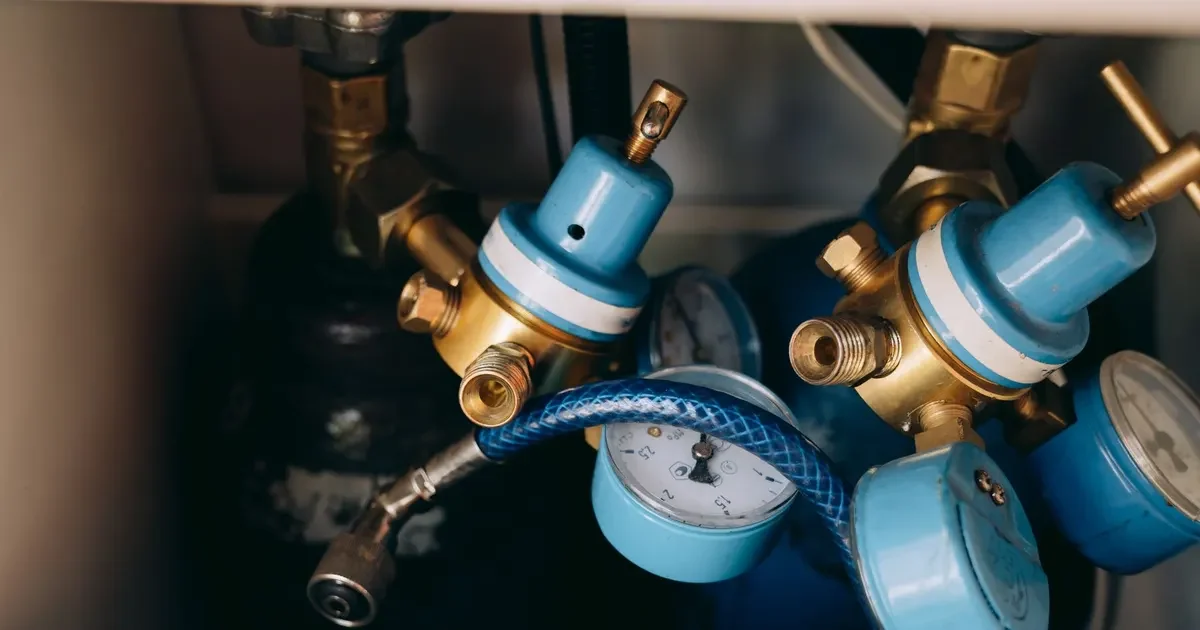
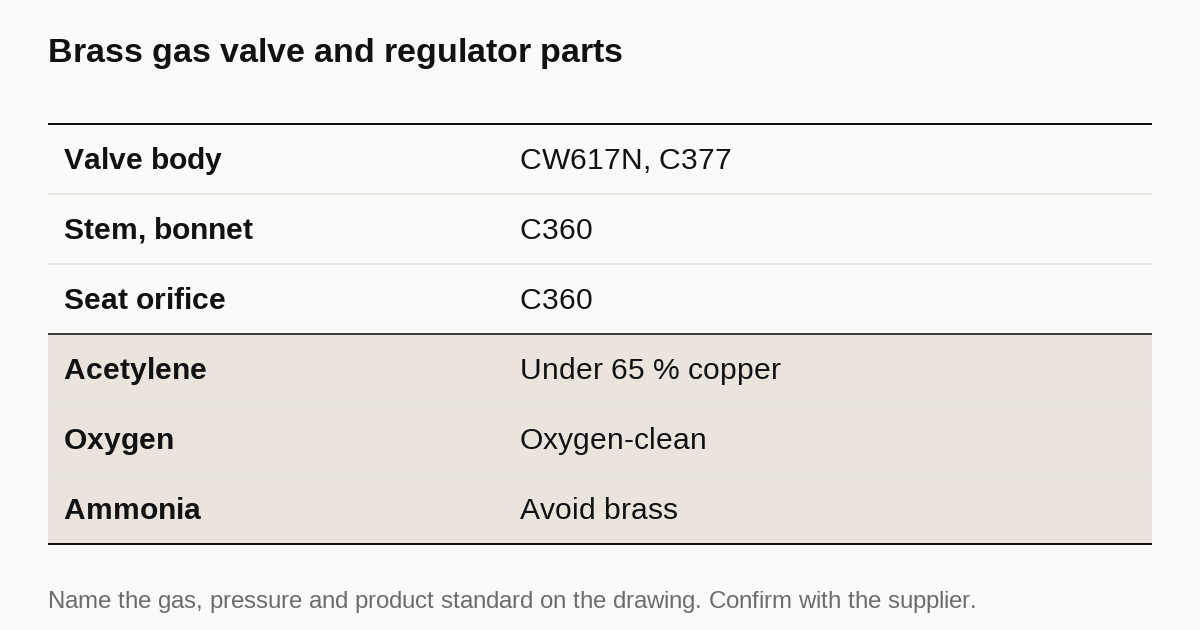
Brass suits gas valves and regulators because it machines to tight sealing features, resists corrosion and does not spark. Leaded grades such as CW617N and C360 are common. Acetylene needs brass under 65 percent copper, oxygen needs oxygen-clean parts and ammonia causes cracking. Name the gas, the pressure and the product standard on the drawing.
Brass has been the metal of gas valves for a century. It machines to the fine sealing features a valve needs, it resists corrosion in damp air and it does not make sparks when struck. A regulator on a gas bottle, a ball valve on a gas line and the control valve on a cooker all hold brass parts that must seal for years.
Gas is less forgiving than water. A weep that would drip in a water pipe becomes a hazard in a gas line. That raises the bar on the machined parts, the grade and the test. This post covers the parts, the grades, the gases that need extra care and what a drawing should say.
The parts
A gas valve or regulator is a small assembly, and most of its metal parts are machined brass.
| Part | Typical grade | Critical feature | Typical check |
|---|---|---|---|
| Valve body | CW617N or C377, hot stamped, then machined | Wall integrity, seat bore, thread | Pressure test, gauge |
| Valve stem | C360 or CW614N | Diameter, O-ring groove, finish | Gauge, visual |
| Ball or plug | Brass, often chrome plated | Roundness, surface finish | Gauge, leak test |
| Regulator bonnet | C360 or CW617N | Thread, spring seat | Gauge |
| Seat orifice | C360 | Bore, edge sharpness, concentricity | Pin gauge, microscope |
| Diaphragm plate | C360 | Flatness, burr-free edges | Gauge |
| Adjusting screw | C360 | Thread fit, slot | Gauge |
| Vent plug and fittings | C360 | Thread, bore | Gauge, leak test |
Typical practice. The product standard and the design drawing take precedence.
Bodies are normally hot stamped from CW617N or C377 forging brass and machined on the seat, thread and sealing faces. Turned parts use C360 free-cutting brass. The forged versus turned decision is in brass hot forging vs machining.
Which gas
The grade rules depend on the gas.
Natural gas and LPG. Brass works well. Sulfur compounds in raw gas tarnish copper alloys, but odorants and pipeline-quality gas are well tolerated. Elastomers matter as much as metal: seals must be compatible with the gas and with the heavy hydrocarbons in LPG, and nitrile and hydrogenated nitrile are common.
Acetylene. Copper and its alloys can form unstable copper acetylide with acetylene. Codes limit the copper content of alloys used in acetylene service, with a figure of about 65 percent copper as the usual ceiling. Free-cutting brass at 60 to 63 percent copper is inside it. Higher copper alloys such as red brass and cartridge brass are not. The code for your product names the limit and any silver restriction.
Oxygen. Brass is widely used in oxygen regulators and valves because it resists ignition better than many metals. Parts must be cleaned to remove oil and particles, since hydrocarbons in oxygen can ignite. Cleaning practice is covered by industry standards such as CGA G-4.1. Chips left in a bore are an ignition source, so the drawing should require cleaning and clean packing for oxygen parts.
Hydrogen and other fuel gases. Brass is used for low-pressure hydrogen service, but pressure, temperature and the product standard decide it. For high-pressure hydrogen, designers usually move to other materials, outside what this site quotes.
Ammonia. Avoid brass. Ammonia and amines crack brass, and the cracks run through stressed parts. Refrigeration and fertilizer systems use steel for that reason.
Product standards
Gas valves and regulators are sold to product standards that set pressure ratings, leak limits, cycle life and materials. Examples include EN 331 for manually operated ball valves in gas installations, EN 88-1 for gas appliance pressure regulators, ANSI Z21.15 for manually operated gas valves and UL 144 for LP gas regulators. The valve maker works to these. The machine shop works to the drawing, so the drawing must carry what the standard needs from the part: the material, the dimensions and the test. A shop is not certifying the valve, and a drawing should not suggest it is.
Machining features that decide sealing
Seat bores and orifices. The edge of an orifice and the face of a seat decide how the valve closes. A burr, a rolled edge or a scratch makes a leak. The surface finish is often Ra 0.4 to 0.8 micrometre, and edges are sharp but burr-free. Small orifices are checked with pin gauges and a microscope, and the bore must be concentric with the seat.
Threads. Gas threads are NPT, ISO 7 tapered or ISO 228 parallel with a sealing face or washer. See NPT vs BSP brass fittings and thread gauging. A bad thread leaks at the joint, and thread sealant approved for gas is needed in the field.
O-ring grooves. Stem seals sit in grooves cut to the O-ring maker’s table. See O-ring grooves in brass.
Cross holes and burrs. Gas passages often cross. Burrs inside can break loose and stop a seat from closing. Deburring cross holes covers the methods, and a boroscope check on the first article is common.
Cleanliness. Oil and chips matter in gas valves. Parts should be washed, dried and packed so that nothing enters the bores.
Need a quote for this part? Get a quote for your brass parts
Testing
Each valve is leak tested, and the machined parts feed into that. Body castings and forgings are pressure tested as a part or as an assembly, with air or nitrogen, and the leak limit comes from the standard. See leak and pressure testing brass valve bodies for the methods. A typical drawing carries the test pressure, the hold time and the limit, or refers to the product standard.
Stress and ammonia
Hot stamped and cold-worked brass holds residual stress. In the presence of ammonia or amines it can crack. A common trigger is a leak-detector liquid or cleaner that contains ammonia, used on a fitting tightened hard at install. Use non-ammoniated leak detector. For parts with heavy cold work, specify a stress relief. See brass stress corrosion cracking.
Traceability, plating and packing
Gas products are traced by lot. A buyer should expect a mill certificate for the bar or forging stock, a heat or lot number carried through machining and a record of the inspection on each lot. If a field failure occurs, the lot number lets the maker find every part cut from the same bar. Ask the shop how it keeps lots apart on the machine, since mixed lots defeat the point.
Chrome or nickel plating on balls, stems and bodies resists wear and tarnish. Plating adds thickness on edges and in small bores, so a seat or orifice dimension must state whether it applies before or after plating, and sealing faces are often masked or finished after plating. Thread sealing faces should not carry plating that can flake. See brass surface finishes and plating.
Packing matters more than usual. Pack oxygen parts in sealed, clean bags and mark them. Keep gas parts from touching each other, since a scratch on a seat face or sealing edge is a leak. Brass also tarnishes in damp transit, which hides inspection marks and raises seal friction; tarnish prevention and packing lists the steps.
What to write on the drawing
Material: CW617N (CuZn40Pb2), copper content below 65 percent, for acetylene service where required.
Mill certificate EN 10204 3.1. Parts clean and free of oil and chips. Packed in sealed bags.
Seat bore 4.00 +0.02/-0, edge sharp and burr-free, surface finish Ra 0.8 on seat face.
Pressure test per product standard, air at test pressure, no bubbles under water.
Checklist
- Gas named: natural gas, LPG, oxygen, acetylene or other.
- Copper limit stated for acetylene, cleaning stated for oxygen.
- Product standard and its edition named.
- Seat, orifice and thread features given with tolerances and finish.
- Burr limits and cleanliness stated.
- Test pressure, hold time and leak limit stated.
- Stress relief and ammonia exposure discussed for hot stamped bodies.
Need gas valve or regulator parts in brass? Send the drawing with the gas and pressure marked. We quote the finished parts within 24 business hours and place the work with one of the partner shops that turn brass.
Frequently asked questions
Can brass be used for acetylene?
Only brass with a copper content below about 65 percent. Higher-copper alloys can form copper acetylide, an unstable compound, with acetylene. Free-cutting brass and forging brass sit around 58 to 63 percent copper, so they pass that rule. Equipment codes set the limit, so check the one that applies to your product.
Why does ammonia matter for brass gas fittings?
Ammonia and amines cause stress corrosion cracking in brass that holds residual stress. A common trigger is a leak-test liquid or cleaner that contains ammonia, applied to a fitting that was tightened hard. Use non-ammoniated leak detector, and ask the shop about stress relief on cold-worked parts.
Do gas valve bodies need lead-free brass?
Not for the gas itself. Drinking water rules do not apply to gas valves, and leaded brass is the usual choice. Appliance makers selling into the EU still need to consider RoHS exemption 6(c) for lead in copper alloys, which has an expiry date, and some customers specify lead-free. State the requirement on the drawing.
Alloys in this guide
| Alloy | Lead % | Mach. | DZR |
|---|---|---|---|
| CW617N CuZn40Pb2C37700 (nearest) · CuZn40Pb2 / CW617N | 1.6 to 2.5 | 80 | Poor |
| C360 free-cutting brassC36000 · CuZn36Pb3 / CW603N | 2.5 to 3.7 | 100 | Poor |
| C377 forging brassC37700 · CuZn39Pb2 / CW612N | 1.5 to 2.5 | 80 | Poor |
Published typical values for the alloy. Machinability against C360 at 100. Not a promise from a shop.
Sources
- Wikipedia, Pressure regulator en.wikipedia.org
- Wikipedia, Brass en.wikipedia.org
Need a quote for this part?
Send the drawing. We read it, send one itemised quote for the finished parts within 24 business hours and place the work with a partner shop that turns brass. Brass only.
Get a quote for your brass parts