Guides / Choosing a Supplier
Booking Screw Machine Capacity for Brass Parts: Forecasts, Releases and Safety Stock
Published November 21, 2026. Reviewed for the facts in the corrections log.
A quote does not reserve machine time. To get brass turned parts on a screw machine when you need them, send a rolling forecast, split it into firm and planned releases, and agree who holds safety stock before the first order. The shop can then buy bar, book plating and book the leak test against your plan.
A quote tells you what a shop would charge for a brass part. It does not tell you when a screw machine will be free to make it. For a one-off lot that gap is small. For fittings you need every month it is the difference between parts on the dock and an expedite call.
This guide is for a buyer of brass turned parts in volume. It covers what to share, how to split it into firm and planned releases, what fills up in a brass shop and who should hold safety stock. A release template and a list of questions to agree before the first order come at the end.
Why a brass quote is not a capacity booking
A quote is a price for a defined part at a defined quantity on the day it is written. The shop has not bought bar, moved a job onto a machine or asked its plating house for a slot. Until an order or a clear forecast arrives, nothing is reserved.
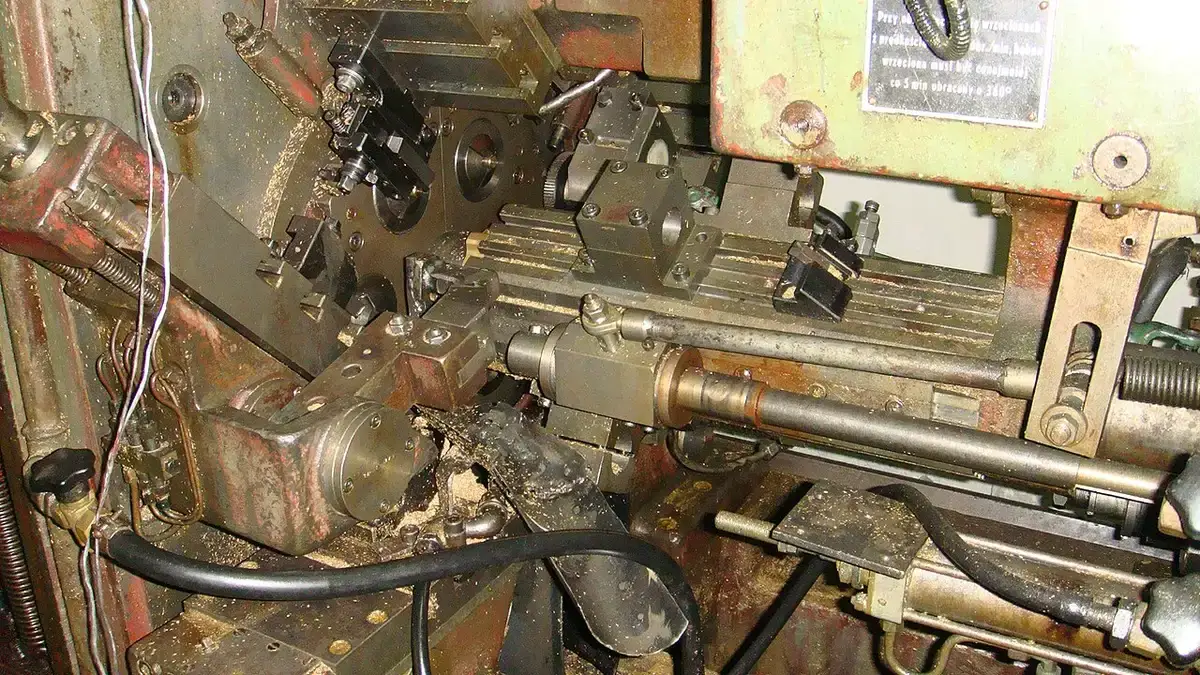
Brass work makes this sharper than most. Screw machines, whether multi-spindle or Swiss-type, are set up for a bar size and a part family. A shop that runs your fitting on a six-spindle machine has to give that machine time to your job and to no other. A shop wants its machines full, so an unforecast job queues behind the ones that were. For how the machines differ, see multi-spindle screw machines for brass.
Lead time depends on where you start counting. It is commonly split into pre-processing (the paperwork and planning before work starts), processing and post-processing, which includes receiving and inspection (Wikipedia). A forecast shortens the first of these. A shop that already knows your weekly volume does not plan from zero when the order arrives.
What a shop needs from you: horizon, firm releases, planned releases
Production planning allocates people, materials and machine capacity over a planning horizon, and it has to account for material availability, resource availability and expected demand (Wikipedia). You supply the demand side. Three pieces of information do most of the work.
A forecast horizon. Quantity per week or per month for the next months, by part number. State how reliable it is. A forecast that swings widely every month is noise, and the shop will learn to ignore it.
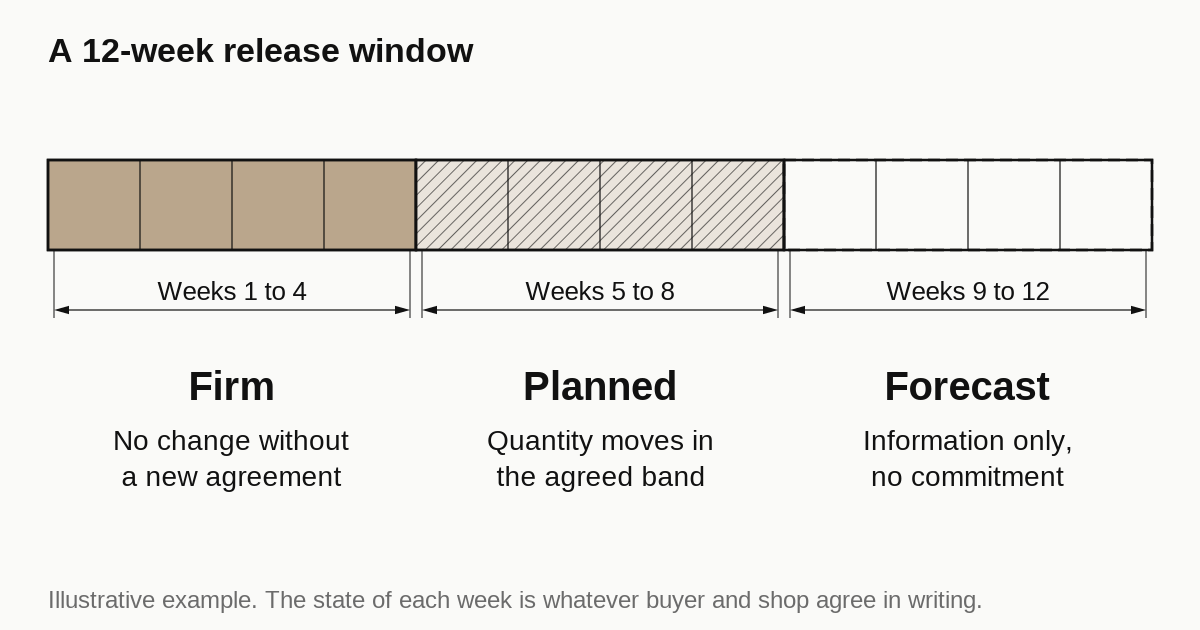
Firm releases. A firm release is a quantity and a ship date you commit to take. The shop can cut bar, book plating and start the job. Agree the length of the firm window with the shop. It should cover the longest step the shop cannot shorten.
Planned releases. These sit between firm and forecast. You expect to confirm them. You agree what the shop may do against them (usually buy bar and book outside steps) and what happens to that bar if you cancel or cut the quantity.
Write down what each word means for your account. “Firm” and “forecast” are not standard contract terms. They mean what both parties agreed. ISO 9001 helps on the shop side: when an order is received, the requirements are reviewed before delivery and the review is recorded, and a change to the customer’s requirements is reviewed and recorded too (Advisera, on clause 8.2 of the 2015 edition, where the order review sits in 8.2.3). Ask the shop to confirm each release in writing so that record exists on both sides.
Bar, plating and leak test: the three things that fill up
Ask the shop which steps limit your part. For turned brass fittings the usual answers are these.
Bar. Brass bar is bought by alloy and size. A screw machine takes bar through the spindle, and the bar is gripped in a collet chuck (Wikipedia). If your part needs a hex bar that the shop does not stock, the purchase is the first step on the critical path. Name the alloy and bar standard on the drawing or PO so the shop buys the right material. See the bar price and copper market for why the shop will want to buy against a firm quantity rather than carry bar at its own risk.
Plating or another outside step. If a plating house works in batches, your lot waits for the next batch and is then queued in its process. The shop books this slot when the job is released. A late firm release means a late plating slot.
Leak test or other final test. A fitting that is pressure or leak tested is limited by test stations, fixtures and operator time as well as by the lathe. See leak and pressure testing of brass valve bodies. If your part has a fixture of its own, ask who owns it and where it is stored.
Ask each shop for the order of the three steps in your routing and the typical gap between them. You are not asking for a lead-time quote. You are asking which step you should plan around.
Safety stock and who holds it
Safety stock is extra stock kept to cover the risk of a stockout when demand or supply varies. It mainly absorbs differences between forecast and actual demand, and it also covers a supplier who cannot deliver extra units on time (Wikipedia). It is not free: someone pays to make it, store it and, for brass, tie up metal value in it.
There are three places it can sit.
| Where | What it covers | Who carries the cost | Watch for |
|---|---|---|---|
| Bar at the shop | A bar delivery that is late or short | The shop, unless you agree to buy it | Who owns it if you cancel the part |
| Finished parts at the shop | A demand spike or a scrapped lot | The shop until you pay for it, then you | Tarnish, packaging and lot traceability while it sits |
| Finished parts at your site | A shipment that is late or lost | You | Ordering early enough to avoid a stockout while a lot is in transit |
Pick one location as the default and put a number on it, in weeks of average demand or in pieces. Say what triggers a refill. Lead-free parts need one more line: the safety stock must be made from the same alloy and heat records as the rest, so a stored lot keeps its traceability. For the paperwork that goes with a lot, see the lead-free brass compliance checklist.
Need a quote for this part? Get a quote for your brass parts
A release schedule template
Use one sheet per part number. Send it on the same day each month. The grid below is an example for a twelve-week window. The quantities and weeks are illustrative: replace them with yours.
| Week | Status | Quantity | Ship date | Change allowed |
|---|---|---|---|---|
| 1 | Firm | 5,000 | Friday, week 1 | None |
| 2 | Firm | 5,000 | Friday, week 2 | None |
| 3 | Firm | 5,000 | Friday, week 3 | None |
| 4 | Firm | 5,000 | Friday, week 4 | Ship date may move later by agreement |
| 5 | Planned | 5,000 | Friday, week 5 | Quantity within the band agreed in writing |
| 6 | Planned | 5,000 | Friday, week 6 | Quantity within the band agreed in writing |
| 7 | Planned | 5,000 | Friday, week 7 | Quantity within the band agreed in writing |
| 8 | Planned | 5,000 | Friday, week 8 | Quantity within the band agreed in writing |
| 9 | Forecast | 6,000 | Friday, week 9 | Information only |
| 10 | Forecast | 6,000 | Friday, week 10 | Information only |
| 11 | Forecast | 6,000 | Friday, week 11 | Information only |
| 12 | Forecast | 6,000 | Friday, week 12 | Information only |
Two columns do the work. Status tells the shop what it may buy and book. Change allowed tells it what you can still change without a conversation. Add a column for the shop’s confirmed date once it replies.
Questions to agree before the first order
Take these to the shop and write the answers down.
- How many weeks of firm releases does the shop need for this part, and why?
- What may the shop buy against a planned release, and who owns the material if the release is cancelled?
- What is the maximum change in quantity, up or down, that the shop accepts inside the planned window without a new quote?
- Which step is the limit for this part: bar, machine, plating or test?
- How much safety stock is held, where, by whom and what refills it?
- How does the shop tell you if it cannot meet a release, and how many working days before the ship date?
- Who confirms a release on your side and who on the shop’s side?
- What happens to a part number that has no release for a set period?
Reviewing the forecast each month
A forecast that is never reviewed becomes a guess. Hold a short monthly review with three questions. What did you forecast and what did you order? Which planned releases turned firm and which did not? What changed in the next twelve weeks?
Keep the record. If a planned release is cut every month, move it to forecast and stop asking the shop to plan for it. If a forecast week turns out larger than planned three times running, raise it. The point is not to be right. It is to be consistent enough that the shop trusts the numbers.
Do the review before the monthly sheet goes out and send the sheet the same day each month. A shop that receives the plan on a known date can put it on its own planning calendar.
If you need brass turned parts quoted with a release pattern like this, send the drawing with your expected annual volume and the weeks you can commit. We quote the finished parts within 24 business hours and place the work with one of the partner shops that turn brass.
A note on this site. Brass CNC Parts does not book capacity or hold stock for any shop. The release grid is an example to adapt, not a standard.
Frequently asked questions
What is the difference between a firm release and a forecast?
A firm release is a quantity and a ship date you commit to buy. The shop can cut bar and book outside steps against it. A forecast is your best estimate and carries no commitment. A planned release sits between them: you expect to confirm it, and you agree in writing what the shop may buy against it.
How far ahead should I share a forecast for brass turned parts?
Share enough weeks to cover the longest step the shop cannot shorten, which for most brass fittings is the bar purchase, an outside plating batch or a test station. Ask the shop how long each of those takes for your part and set the firm window to match. The twelve-week grid below is a starting point, not a rule.
Who should hold safety stock of brass fittings?
Safety stock is extra stock held to cover the risk of running out when demand or supply varies. It can be bar at the shop, finished parts at the shop or finished parts at your site. Each location has a different cost and a different owner. Agree which one applies, the quantity and who pays for it before the first purchase order.
Does a purchase order guarantee the shop will hold capacity?
Only for the quantity and dates on it. A shop plans machine time, bar and outside steps from the orders and forecasts it has. A single order for a first lot says nothing about the second one. If you need machine time in future weeks, say so in the forecast and have the shop confirm it back in writing.
Alloys in this guide
| Alloy | Lead % | Mach. | DZR |
|---|---|---|---|
| C360 free-cutting brassC36000 · CuZn36Pb3 / CW603N | 2.5 to 3.7 | 100 | Poor |
| C69300 silicon brassC69300 · CuZn21Si3P / CW724R | under 0.09 | 80 | High |
Published typical values for the alloy. Machinability against C360 at 100. Not a promise from a shop.
Sources
- Wikipedia, Safety stock en.wikipedia.org
- Wikipedia, Lead time en.wikipedia.org
- Wikipedia, Automatic lathe en.wikipedia.org
- Wikipedia, Production planning en.wikipedia.org
- Advisera, ISO 9001:2015 versus ISO 9001:2026, main differences advisera.com
- Advisera, clause-by-clause explanation of ISO 9001:2015 info.advisera.com
Need a quote for this part?
Send the drawing. We read it, send one itemised quote for the finished parts within 24 business hours and place the work with a partner shop that turns brass. Brass only.
Get a quote for your brass parts